
Remove Hard Water Spots From Glass Windows: 2026 Guide
Table of Contents
- Why Hard Water Spots Form on Glass Windows
- What You’ll Need: Tools and Cleaning Agents
- Step-by-Step: How to Remove Hard Water Spots From Glass Windows
- Best Hard Water Stain Remover for Glass: DIY vs. Commercial Options
- How to Prevent Hard Water Spots on Windows
- Common Mistakes to Avoid When Cleaning Glass
- When to Call a Professional
- Frequently Asked Questions
Last Updated: September 29, 2026
Why Hard Water Spots Form on Glass Windows
Hard water spots on glass windows are mineral deposits left behind when water evaporates and leaves calcium and magnesium on the surface. Rain, sprinklers, and garden hoses all carry these dissolved minerals. When the water dries, the minerals stay put and bond to the glass.
Florida’s water supply is especially rich in calcium, which is why so many homeowners here battle spotting on windows, lanais, and pool enclosures year-round.
The Difference Between Mineral Deposits and Glass Etching
Mineral deposits are a layer of calcium and magnesium sitting on top of the glass. They can be removed.
Here’s how to tell them apart:
- If the spot fades when wet, it’s a deposit
- If it stays visible when wet, it may be etching
- If you can feel a raised bump, it’s a deposit
- If the surface feels pitted or rough, it’s likely etched
What You’ll Need: Tools and Cleaning Agents
The right tools make this job faster and safer. Grab these before you start:
- White vinegar (the workhorse for mineral scale)
- Baking soda (for a mildly abrasive paste)
- Dish soap (a few drops for grease cutting)
- Spray bottle
- Microfiber cloths (at least two)
- Squeegee
- Non-scratch pad or synthetic steel wool (0000 grade)
- Bucket of clean water
- Rubber gloves
Test your squeegee on a small corner first. A worn or nicked rubber blade drags grit across the glass and leaves fine scratches that show up in direct sunlight.
Step-by-Step: How to Remove Hard Water Spots From Glass Windows
This process works on most exterior glass, windshields, and shower doors. Work in shade, never in direct sun. Heat makes solutions dry too fast and can cause streaking.
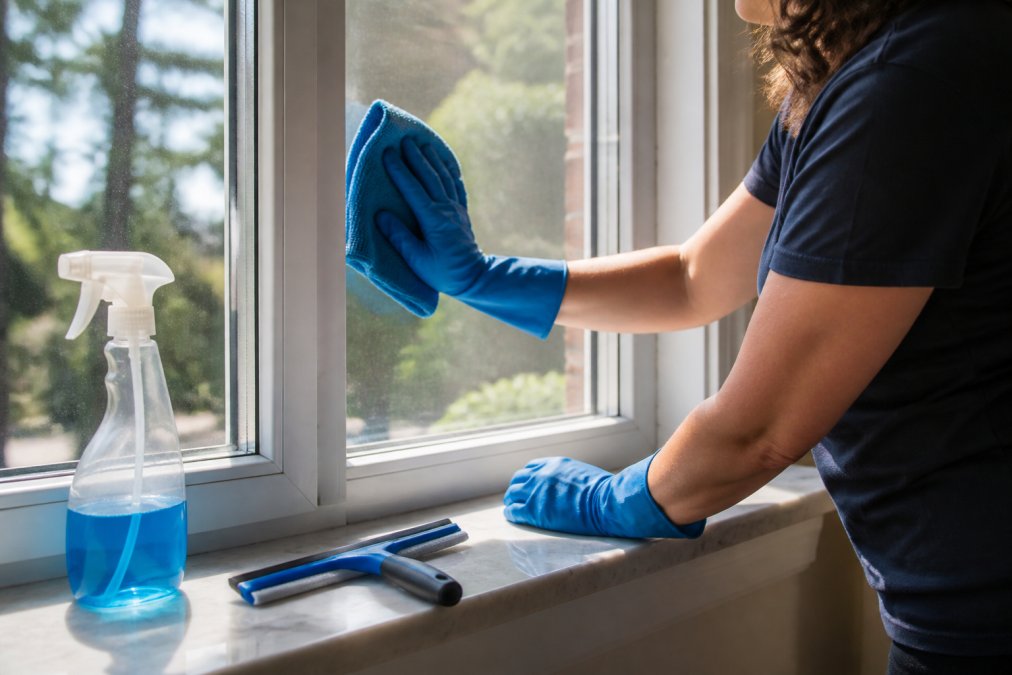
Step 1: Test a Small Area First
Spray your chosen solution on a small corner. Wait a minute. Wipe it dry with a microfiber cloth.
Step 2: Apply Your Cleaning Solution
For light spots, mix equal parts white vinegar and water in a spray bottle. Spray the glass and let it sit for a few minutes. This dwell time lets the acidic solution break down the calcium buildup.
Step 3: Agitate and Rinse
Work the solution in small circles. Don’t scrub hard. Let the chemistry do the work, not your elbow.
Never mix vinegar with bleach-based cleaners. The chemical reaction releases toxic gas. If you’re unsure what’s already on the glass, rinse it fully before switching products.
Best Hard Water Stain Remover for Glass: DIY vs. Commercial Options
The best hard water stain remover for glass depends on how bad the buildup is and what kind of glass you’re treating. Here’s how the options compare:
| Option | Best For | Dwell Time | Risk Level |
|---|---|---|---|
| Vinegar and water | Light, fresh spots | 3-5 minutes | Very low |
| Baking soda paste | Medium mineral scale | 5-10 minutes | Low (mildly abrasive) |
| Commercial acid cleaners | Heavy, set-in deposits | Per label | Medium (needs gloves, ventilation) |
| Synthetic steel wool | Stubborn spots after soaking | N/A | Medium (can scratch if rushed) |
Why the Chemistry Matters
Vinegar is acetic acid, typically around 5% concentration in the grocery-store bottle. It dissolves calcium carbonate by converting it into soluble calcium acetate, which rinses away. That reaction is why dwell time matters more than scrubbing: the acid needs a few minutes of contact to break the mineral bond.
Match the Remover to the Glass Type
Not every glass surface tolerates the same approach. This is where most guides stay vague, and where the wrong choice causes real damage:
- Tempered glass (common in shower doors and patio doors) is heat-treated for strength but still vulnerable to abrasive scratching. Stick with vinegar or a non-scratch pad.
- Low-E coated glass has a thin metallic oxide film that reflects heat. Abrasive pads and strong acids can strip or haze that coating. Use the mildest option that works, and never use synthetic steel wool.
- Automotive windshields are laminated and often carry a hydrophobic factory coating. Acid cleaners can degrade the coating over time. A dedicated automotive glass cleaner or diluted vinegar is safer.
- Untreated exterior window glass is the most forgiving. Most DIY and commercial options are fine here.
When DIY Stops Working
For glass that’s been spotted for years, the honest answer is that no off-the-shelf product may fully restore it. If vinegar, baking soda, and a commercial acid cleaner have all failed after proper dwell times, the deposit may have etched into the glass. That’s when professional help makes sense, not because a pro has a secret product, but because they can confirm whether the damage is removable or permanent before you spend more time and money.
How to Prevent Hard Water Spots on Windows
Prevention is cheaper than removal. A few habits keep mineral deposits from taking hold:
- Dry glass immediately after rain or watering
- Use a squeegee after every wash
- Redirect sprinklers away from windows and siding
- Apply a hydrophobic protective coating to slow mineral bonding
- Rinse pool deck splash-off before it dries on nearby glass
Prevention by Glass Type
Prevention isn’t one-size-fits-all. The right routine depends on what the glass is and where it sits:
- Low-E coated windows: Skip abrasive pads and acidic cleaners entirely. A squeegee and a pH-neutral glass cleaner preserve the coating that does the energy-saving work. Once that film is scratched, the window loses efficiency and the damage is permanent.
- Tempered shower doors: These see daily soap scum plus mineral scale. A squeegee after every shower is the single highest-impact habit. A hydrophobic coating formulated for shower glass extends the interval between deep cleans.
- Automotive windshields: Park facing away from sprinklers when possible. If you can’t, a quick rinse with a hose and a microfiber dry beats letting hard water bake on in the sun. Avoid parking under trees that drop sap, which bonds to glass much like mineral scale.
- Exterior windows near irrigation: The water source is the real problem. Adjust sprinkler heads so they arc away from the house, and run irrigation in the early morning so any overspray dries before the heat of the day accelerates bonding.
Managing Runoff When You Clean
Acidic cleaners, vinegar included, don’t belong in your garden beds at full strength. A few practical habits keep the runoff from doing collateral damage:
- Rinse the glass with plain water after the acid dwells, and direct that rinse toward a driveway, sidewalk, or lawn area that can tolerate a diluted acid.
- Keep vinegar and commercial acid cleaners away from the drip line of acid-loving plants like azaleas, rhododendrons, and blueberries, which are already sensitive to pH swings.
- Never pour leftover cleaning solution down a storm drain. Storm drains typically flow untreated to local waterways, and many municipalities treat that as an environmental violation.
- If you’re cleaning a large glass surface, work in sections so you can control where the runoff goes rather than letting it sheet across the whole yard.
The single best prevention step is drying glass fast. Minerals can only bond when water sits and evaporates. Remove the water, remove the problem. But match your method to the glass type, and mind where the runoff lands, the wrong cleaner on coated glass or in a garden bed creates a second problem while solving the first.
Common Mistakes to Avoid When Cleaning Glass
Most failed attempts come down to a few repeat mistakes:
- Cleaning in direct sun. Solution dries before it works. Always work in shade.
- Skipping the spot test. You risk scratching glass or wasting hours on etched surfaces.
- Scrubbing too hard. Pressure doesn’t remove minerals. Dwell time does.
- Using abrasive pads on coated glass. You can strip the coating and make spotting worse.
- Leaving cleaner residue. It dries into new streaks and attracts more dust.
When to Call a Professional
Some jobs aren’t worth the risk. Call a pro when:
- Spots remain after several DIY attempts
- The glass feels pitted or rough (possible etching)
- You’re dealing with second-story or hard-to-reach windows
- You have a large property with multiple buildings
- The buildup covers pool enclosures, lanais, or commercial storefronts
Frequently Asked Questions
Can hard water stains be permanent on glass?
Yes, hard water stains can become permanent if left untreated. The minerals in hard water, primarily calcium and magnesium, can bond with the glass surface over time. This process, called etching, creates microscopic pits that trap the minerals. Once etching occurs, the damage is permanent and cannot be removed by cleaning alone. Regular cleaning and prevention are key to avoiding this outcome.
What is the best hard water stain remover for glass?
The best hard water stain remover for glass depends on the severity of the stains. For light mineral deposits, a mixture of white vinegar and water works well. For tougher stains, a commercial product designed specifically for hard water or a paste of baking soda and water can be effective. Always test any product on a small, inconspicuous area first to ensure it does not damage the glass.
How do you prevent hard water spots from returning on exterior windows?
Preventing hard water spots involves minimizing contact with hard water. After cleaning, use a squeegee to remove water immediately. Consider installing a water softener or using a water filtration system for your outdoor spigots. Applying a hydrophobic coating to the glass can also help repel water and minerals. Regular maintenance cleaning, especially after rain or sprinkler exposure, is essential.
Is it safe to use vinegar on glass windows?
Yes, vinegar is generally safe for glass windows. Its acidic nature helps dissolve mineral deposits without damaging the glass. However, avoid using vinegar on tinted windows or those with a special coating, as the acid can degrade these surfaces. Always dilute vinegar with water and test on a small area first. Rinse thoroughly after use to prevent any residue.
Hard water spots are stubborn, but they’re beatable with the right method and a little patience. The catch is that etched glass can’t be reversed, so acting early matters. Crystal Clear Windows offers professional window cleaning, soft washing, and exterior maintenance for residential and commercial properties, backed by free estimates and a service-first approach. Get started with Crystal Clear Windows and keep your glass clear year-round.