

Cleaning Pool Lanais Without Damaging Screens
Table of Contents
- Cleaning Pool Lanais Without Damaging Screens: What You Need
- Step-by-Step: How to Clean Pool Lanai Screens Safely
- Choosing a Safe Cleaner for Pool Screens
- How to Remove Algae from Pool Screens
- Pressure Washing Pool Cage Screens: When It’s Safe
- How Often to Clean Lanai Screens
- Conclusion
- Frequently Asked Questions
Last Updated: October 12, 2026
Cleaning Pool Lanais Without Damaging Screens: What You Need
Cleaning pool lanais without damaging screens comes down to three things: the right tools, low pressure, and patience. This guide from Crystal Clear Windows walks you through each step.
The screens on a lanai are not glass. They are woven mesh held in a thin aluminum frame. Push too hard, spray too close, or scrub with the wrong brush, and the mesh stretches, sags, or tears. Once a screen sags, no amount of cleaning will fix it. You replace it.
So the goal is simple: lift the dirt without stressing the mesh. That means working top to bottom, using gentle tools, and letting chemistry do most of the work.
Here is what most guides get wrong. They tell you to blast the screen clean. Pressure is the fastest way to ruin a screen. The slower, softer method is the one that works.
Below, we’ll show you exactly what to gather, how to clean each part of the enclosure, and how to handle the green algae that shows up after heavy rain.
The single biggest cause of torn lanai screens is pressure. A garden hose with a spray nozzle removes most dirt safely. A pressure washer at the wrong setting destroys mesh in seconds.
Tools and Supplies to Gather First
Gather everything before you start. Once you are up on a ladder, you do not want to climb down for a forgotten brush.
- A garden hose with an adjustable spray nozzle
- A soft-bristle brush or a soft car-wash mitt
- A bucket
- A mild liquid soap or a screen-safe cleaner
- A microfiber cloth or squeegee for the frame
- Safety glasses
- A step ladder for high sections
Skip wire brushes, scouring pads, and stiff deck brushes. They snag the mesh and leave permanent pulls. Also skip any cleaner with bleach or ammonia unless the label says it is safe for screens.
Step-by-Step: How to Clean Pool Lanai Screens Safely
Start at the top of the enclosure and work down. Dirt and cleaner run downward, so cleaning from the top keeps you from re-soiling sections you already finished.
- Rinse the whole screen with plain water first. This lifts loose dust and pollen.
- Mix a bucket of mild soapy water.
- Dip your soft brush or mitt and wipe the screen gently in straight lines.
- Rinse the brush often so you are not smearing dirt back on.
- Rinse the screen top to bottom with the hose.
- Wipe the aluminum frame with a microfiber cloth.
- Let everything air dry.
Keep the nozzle at least a foot away from the mesh. Close-up spraying concentrates force on one small area. That is how screens tear.
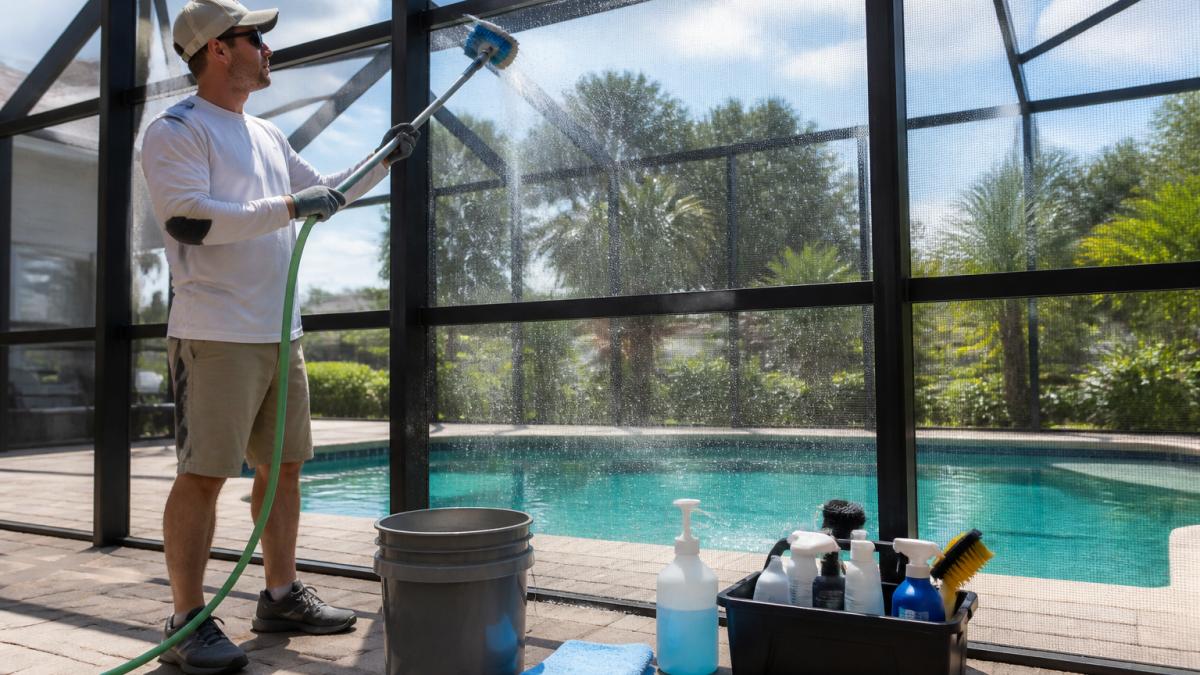
Never scrub a screen while it is dry. Dry brushing pushes grit through the mesh and scratches the coating. Always wet the screen first.
Rinsing and Drying Without Streaks
Streaks usually come from dirty rinse water, not from the soap. Rinse from the top down and keep the water flowing. Standing soapy water dries in lines.
If you see streaks after drying, they are often on the frame, not the screen. Wipe the frame with a clean, damp cloth and let it air dry. Avoid paper towels. They leave lint behind on mesh.
Work in the shade when you can. Direct sun dries soap before you can rinse it, which leaves marks.
Choosing a Safe Cleaner for Pool Screens
A safe cleaner for pool screens is a mild, pH-neutral soap mixed with water. Dish soap works. So does a dedicated screen cleaner. The key is that it is gentle and rinses clean.
What to avoid:
- Bleach-based sprays, which weaken mesh over time
- Ammonia cleaners, which can harm the frame finish
- Abrasive powders, which scratch
- Any product labeled for “heavy-duty degreasing” on screens
Test any new cleaner on a small, hidden corner first. Wait a few minutes and check for discoloration. If the screen looks fine, continue.
For most homes, a few drops of mild soap in a bucket of water is all you need. You do not need a specialty product to get a clean screen.
How to Remove Algae from Pool Screens
Algae shows up as a green or black film, often on the shaded side of the enclosure. It grows fast in warm, damp weather. To remove algae from pool screens, use a soft brush, a mild soap solution, and gentle rinsing. Do not scrub hard.
Steps for algae:
- Rinse the screen to loosen the film.
- Apply your mild soapy water with a soft brush.
- Let it sit for a few minutes to soften the growth.
- Gently brush in one direction.
- Rinse thoroughly from the top down.
- Repeat if a second pass is needed.
If algae keeps returning, the cause is usually shade and moisture, not your cleaning. Trimming plants back from the enclosure helps airflow and cuts regrowth.
For stubborn algae on the frame, use a soft cloth and a mild soap solution. Never use a stiff brush on the frame’s painted finish. It dulls the color and speeds up corrosion.
Pressure Washing Pool Cage Screens: When It’s Safe
Pressure washing pool cage screens is safe only at low pressure, from a distance, with a wide fan tip. Even then, it is risky. Most screens are not built to take a direct blast.
Here is the honest answer. For routine cleaning, a garden hose does the job. For heavy buildup on the frame and concrete, a pressure washer helps. For the screens themselves, keep the pressure low and the nozzle far away.
Safe pressure washing rules:
- Use the lowest pressure setting
- Use a wide fan tip, not a pinpoint stream
- Stand several feet back from the mesh
- Never spray straight into a screen at close range
- Test on one small area first
If a screen already has a small tear or a sag, do not pressure wash it at all. The force will make it worse.
| Surface | Best Method | Pressure Level | Risk If Done Wrong |
|---|---|---|---|
| Screen mesh | Garden hose and soft brush | Low | Tears and sagging |
| Aluminum frame | Soft cloth and mild soap | Low | Dulled finish |
| Concrete floor | Pressure washer | Medium | Etching and streaks |
| Pool deck | Pressure washer or soft wash | Medium | Surface damage |
If you are unsure, call a professional. We handle lanai cleaning with soft washing, which uses low pressure and the right cleaners for the surface.
How Often to Clean Lanai Screens
Clean lanai screens two to four times a year in most climates. Homes near trees, water, or heavy pollen need it more often. In Florida, where humidity and rain drive algae growth, quarterly cleaning keeps screens clear and frames in good shape.
Signs it is time to clean:
- A gray or green film on the mesh
- Dull, hazy view through the screen
- Visible algae on the frame
- Pollen or dust buildup after a dry spell
A light rinse every few weeks between deep cleans helps too. It keeps dirt from setting in.
Two to four cleanings a year is the baseline. If you live near water or lots of trees, plan on quarterly. Consistent light cleaning beats one heavy scrub.
Conclusion
Keeping a lanai clean without wrecking the screens takes the right tools and a gentle hand. The payoff is a clear view, a longer-lasting enclosure, and no costly screen replacements. If the job feels too big, or the algae keeps coming back, that is where we come in. At Crystal Clear Windows, we offer soft washing and specialized cleaning for lanais, pool areas, and patios, plus free estimates. Get a quote and let us handle the tough buildup so your screens stay intact.
Frequently Asked Questions
How do you clean pool lanai screens without damaging them?
Start by gently rinsing the screens with a garden hose to remove loose dirt. Mix a few drops of mild dish soap with water and apply it using a soft-bristle brush or microfiber mitt, working in gentle circular motions. Avoid scrubbing hard or using abrasive tools. Rinse thoroughly and let air dry. This method cleans pool lanai screens without stressing the mesh or frame.
What is the safest cleaner for pool cage screens?
The safest options are mild dish soap diluted in water or a dedicated screen cleaner labeled safe for aluminum and fiberglass. Avoid bleach, ammonia, and abrasive powders, which can degrade screen mesh and damage frames. For tough spots like algae, a diluted oxygen-based cleaner works well. Always test any product on a small, hidden area first.
Can you pressure wash lanai screens?
Pressure washing pool cage screens is risky. High pressure can tear the mesh, bend frames, and force water behind the enclosure. If you must use a pressure washer, keep it on the lowest setting, use a wide fan tip, and hold the nozzle at least 12 inches away. For most homeowners, a garden hose and soft brush are safer and just as effective.
How often should you clean pool cage screens?
In most climates, cleaning lanai screens every three to six months keeps them clear and prevents buildup. If you live near trees, have a pool, or notice algae, clean them every two to three months. Regular rinsing with a hose between deep cleans also helps extend the time between full cleanings.