

How to Clean Black Streaks Off Roof Shingles
Table of Contents
- What Causes Black Streaks on Roof Shingles
- Is Pressure Washing Bad for Roof Shingles?
- Safe Cleaning Solutions for Asphalt Shingles
- Step-by-Step: How to Clean Black Streaks Off Roof Shingles
- Soft Wash Roof Cleaning Cost: What Affects the Price
- Preventing Roof Algae Growth Long-Term
- When to Hire a Professional Roof Cleaning Service
- Conclusion
- Frequently Asked Questions
Last Updated: September 28, 2026
What Causes Black Streaks on Roof Shingles
Those dark lines running down your roof are usually a living organism, not dirt. The culprit is Gloeocapsa magma, a blue-green algae that lands on asphalt shingles as an airborne spore and feeds on the limestone filler inside the shingle itself.
Here’s what makes it so stubborn. The algae builds a dark, waxy outer shell that shields it from sun and rain. That shell is why black streaks survive heavy storms and why they seem to spread every season.
Warm, humid air plus shade equals ideal growing conditions for algae. Warm, humid air plus shade equals ideal growing conditions for algae. Once it takes hold, the streaks spread downward from the ridge, following water flow.
Left alone, the algae eats away at the shingle granules that protect your roof. That shortens roof longevity and drains your curb appeal.
Is It Algae or Mold?
Most black streaks on roofs are algae, not mold. Gloeocapsa magma causes the dark, streaky staining you see on asphalt shingles. Mold and mildew can grow on roofs too, but they usually show up as fuzzy or powdery patches in damp, shaded spots.
So how do you tell them apart? Look at the pattern.
- Algae: dark streaks that run vertically down the roof slope
- Mildew: soft, powdery patches, often gray or white
- Dirt: even, thin film with no clear pattern
Algae is by far the most common cause of black streaks, especially in humid climates.
How to Identify Algae vs. Mildew vs. Dirt
A quick visual check tells you what you’re dealing with. Use this guide:
| Stain Type | Appearance | Texture | Location |
|---|---|---|---|
| Algae | Dark black streaks | Waxy, hard shell | North-facing slopes, shade |
| Mildew | Gray or white patches | Powdery, soft | Damp, shaded areas |
| Dirt | Brownish, even film | Gritty, loose | Everywhere, especially valleys |
Here’s the part most people miss: if the stain feels waxy and won’t rinse off, it’s algae. Dirt washes away with rain. Algae holds on.
Is Pressure Washing Bad for Roof Shingles?
Yes, pressure washing is bad for asphalt shingles, and it can cause permanent damage. High-pressure water blasts away the protective granules on your shingles. Once those granules are gone, the shingle dries out, cracks, and fails years early.
The damage doesn’t stop there. Pressure washing can:
- Strip granules down to the bare asphalt
- Force water under shingles and into your attic
- Crack or lift shingles, opening the door to leaks
- Void your roof warranty in many cases
That last point matters. Many shingle manufacturers require specific cleaning methods, and pressure washing isn’t one of them. Check your manufacturer warranty terms before you touch the roof.
The right method is a low-pressure wash, often called soft washing. It uses gentle water pressure paired with a cleaning solution to kill the algae at the root. No granules lost. No cracked shingles.
Safe Cleaning Solutions for Asphalt Shingles
The safest way to clean asphalt shingles is a soft wash using a bleach-based solution. Sodium hypochlorite is the active ingredient that kills algae, mildew, and mold on contact.
You’ll also see commercial roof cleaning products at hardware stores. Look for a mildewicide rated for roofing material. Always read the label and follow the mix ratios exactly.
Never mix bleach with ammonia or other cleaners. The fumes are toxic.
Homemade Black Streak Remover
A simple DIY mix works for light staining on asphalt shingles. Here’s a basic recipe:
- 1 part bleach solution (plain, unscented household bleach)
- 3 parts water
- A few drops of mild dish soap (optional, helps the mix cling)
How to apply it:
- Pour the mix into a garden sprayer.
- Apply from the bottom of the roof upward so you don’t streak clean areas.
- Let it sit for the full chemical dwell time (usually 10-15 minutes).
- Rinse with a low-pressure wash from a garden hose.
A common mistake is skipping the dwell time. The bleach needs time to kill the algae. Rinse too soon and the streaks come back in weeks.
Never let bleach solution dry on shingles in direct sun. It can bleach the shingle color and leave a chalky residue. Work in the shade or early morning, and rinse before the solution dries.
Chemical Dwell Time and Roof Runoff
Chemical dwell time is how long your cleaning solution stays wet on the shingles before you rinse. Too short and it won’t kill the algae. Too long and it dries, which can stain shingles and harm plants below.
Roof runoff is the bigger concern most guides skip. Whatever you put on your roof flows into your gutters, then onto your lawn, garden beds, and driveway.
Protect your landscaping before you start:
- Soak plants and grass near the roof line with plain water first
- Cover sensitive shrubs with plastic sheeting
- Reroute downspouts away from garden beds if you can
- Rinse everything again with plain water when you’re done
A pre-wet and post-rinse of your landscaping is the single most effective way to prevent plant damage from roof runoff. It dilutes the bleach before it can burn roots.
Step-by-Step: How to Clean Black Streaks Off Roof Shingles
Cleaning black streaks safely takes about 1-2 hours for an average roof, plus setup time. Follow these steps in order.
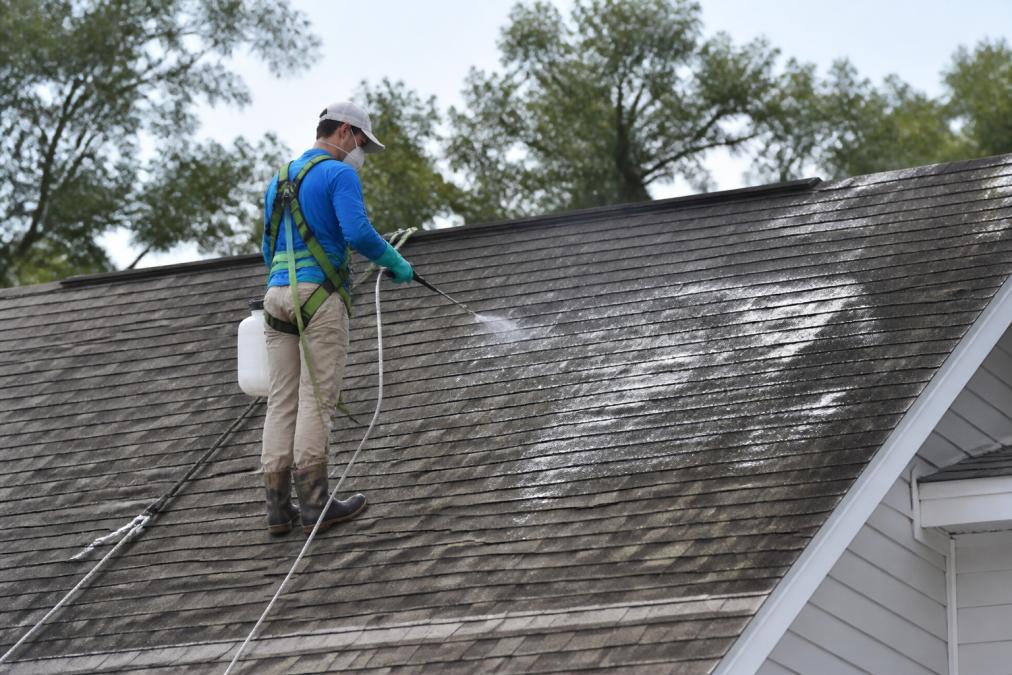
What you’ll need:
- Garden sprayer or pump sprayer
- Bleach-based roof cleaner or homemade mix
- Garden hose with a low-pressure nozzle
- Safety harness and non-slip shoes
- Safety glasses and gloves
- Plastic sheeting for plants
Safety Precautions for Roof Work
Roof work is dangerous, and the slope is the biggest risk. Steep roofs and wet shingles are a bad combination. If your roof is steep or you’re not comfortable on a ladder, stop and call a pro.
Basic safety rules:
- Always wear a safety harness on any roof above one story
- Check ladder stability before you climb
- Wear non-slip shoes, never bare feet or sandals
- Never work on a wet or windy roof
- Keep one hand free for balance at all times
The most common DIY mistake is working alone on a roof. If you slip, no one is there to help. Always have someone home and within earshot when you’re on the roof.
Soft Wash Roof Cleaning Cost: What Affects the Price
Soft wash roof cleaning cost depends on roof size, pitch, and how bad the staining is. Most providers quote based on square footage, accessibility, and the amount of solution needed.
Here’s what moves the price up or down:
| Factor | Effect on Price |
|---|---|
| Roof size | Larger roofs cost more |
| Roof pitch | Steep roofs need more safety gear |
| Stain severity | Heavy algae needs stronger treatment |
| Accessibility | Tight lots and tall homes add time |
| Landscaping | More plants means more prep work |
Preventing Roof Algae Growth Long-Term
Preventing roof algae growth comes down to two things: keeping the roof dry and making the surface hostile to spores. You can’t control the weather, but you can control the roof.
Start with these habits:
- Trim tree branches that shade the roof
- Keep gutters clear so water drains fast
- Rinse the roof lightly once or twice a year
- Reapply a preventative treatment every 2-3 years
Zinc Strips and Copper Flashing
Zinc strips and copper flashing are the two most effective preventative treatments for roof algae. Both work the same way: rain washes tiny metal particles down the roof, and those particles stop algae from growing.
- Zinc strips: nailed along the ridge, cheaper, last 4-6 years
- Copper flashing: installed at the ridge and valleys, lasts decades, costs more
Preventative treatments like zinc strips work best right after a professional cleaning. Installing them on a stained roof just locks in the streaks underneath.
When to Hire a Professional Roof Cleaning Service
Hiring a professional makes sense when your roof is steep, tall, or heavily stained. It’s also the right call if you want the job done without risking your safety or your landscaping.
Call a pro if:
- Your roof is more than one story high
- The pitch is steep or hard to walk
- Streaks cover most of the roof
- You have delicate shingles or an older roof
- You want the work backed by a warranty
Conclusion
Black streaks won’t fix themselves, and pressure washing will only make things worse. The safe path is a soft wash with a bleach-based solution, proper safety gear, and real plant protection.
Frequently Asked Questions
What is a good homemade black streak remover for roof shingles?
A mix of 1 part sodium hypochlorite (household bleach) to 3 parts water works for most asphalt shingles. Add a small amount of mild dish soap to help the solution cling. Apply with a garden sprayer, let it dwell for 10-15 minutes, then rinse with low pressure. Never mix bleach with ammonia or other cleaners. Test a small area first, and check your shingle manufacturer’s specifications before using any chemical.
Why do my shingles have black streaks?
The streaks come from Gloeocapsa magma, a type of algae that feeds on limestone filler in asphalt shingles. It thrives in warm, humid climates and spreads through airborne spores. As it grows, it darkens and forms the streaky pattern you see. It is not usually a structural problem, but it does affect curb appeal and can shorten roof longevity if left untreated.
Is it safe to pressure wash roof shingles?
No. Pressure washing is bad for roof shingles because high pressure strips the protective granules from the asphalt surface. Once those granules are gone, the shingle degrades faster and may leak. Soft washing, which uses low pressure and a cleaning solution, is the safe alternative. It removes algae stains without damaging the roofing material or voiding your warranty.
How often should you clean black streaks off a roof?
Most roofs need cleaning every 2-3 years, depending on shade, humidity, and tree cover. In humid climates, algae can return within 12-18 months if no preventative treatment is applied. Zinc strips or copper flashing along the ridge can slow regrowth. If you notice streaks returning quickly after a cleaning, a preventative treatment is worth the investment.