
Is Soft Washing Safe for Lanais? A Complete Guide
Table of Contents
- Is Soft Washing Safe for Lanais? What You Need to Know
- Soft Washing vs Pressure Washing Lanai: Key Differences
- How to Clean Lanai Screens: Step-by-Step Instructions
- Safe Lanai Cleaning Solution: Dilution, Dwell Time, and Material Compatibility
- How Often to Clean a Lanai: Schedule and Prevention
- Protecting Plants, Pets, Pools, and Nearby Surfaces
- When Soft Washing Is Not Appropriate: Risks and Limitations
- Post-Cleaning Inspection and Troubleshooting
- Frequently Asked Questions
Last Updated: October 5, 2026
Is Soft Washing Safe for Lanais? What You Need to Know
The question of is soft washing safe for lanais comes up often, and the answer is yes, it’s the method we recommend for almost every screen enclosure.
The key difference comes down to pressure. A standard pressure washer pushes water at thousands of pounds per square inch.
The good news is that soft washing avoids nearly all of these issues when it’s done right.
Below, we’ll walk through how soft washing works, how it compares to pressure washing, and exactly how to clean your lanai safely.
Soft Washing vs Pressure Washing Lanai: Key Differences
Soft washing and pressure washing differ mainly in how they clean. Soft washing removes grime with low pressure and a cleaning solution. Pressure washing removes grime with high pressure and water alone.
That single difference changes everything for a lanai.
- Soft washing: Low pressure, cleaning solution, safe for screens and paint
- Pressure washing: High pressure, water only, risky for mesh and finishes
- Best for lanais: Soft washing, almost every time
Screen mesh is the fragile part. High pressure can stretch, tear, or pop screens right out of their frames. It can also strip paint and finish from aluminum, which then leads to corrosion.
Soft washing treats the algae and mildew at the root instead. According to the U.S. Environmental Protection Agency’s guidance on safe cleaning products, choosing the right cleaning product matters as much as the method itself.
For lanais, pool cages, and screen enclosures, soft washing is the safer choice. High pressure is the fastest way to damage screens and painted frames.
How to Clean Lanai Screens: Step-by-Step Instructions
Cleaning lanai screens safely comes down to preparation, the right solution, and patience. Rushing with high pressure is what causes damage. The steps below reflect how a typical professional soft-wash job is sequenced.
What You’ll Need
- A pump sprayer (1-2 gallon) or a dedicated soft-wash system with a downstream injector
- A mild, biodegradable cleaning solution labeled safe for aluminum and screen mesh
- A soft-bristle brush (a car-wash or flag-tipped brush works well)
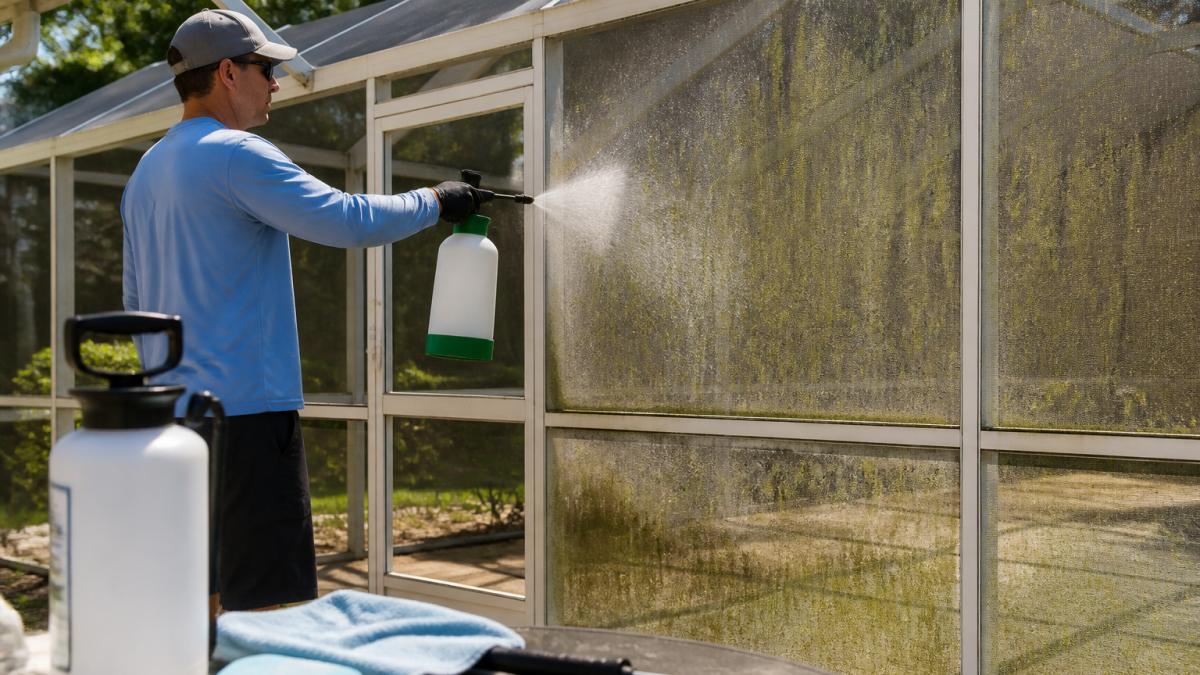
Step-by-Step Cleaning Process
- Clear the area. Move furniture, grills, and pool toys at least 10 feet away from the screens. Anything you can’t move, cover.
- Protect nearby surfaces. Drape plastic sheeting over shrubs, flower beds, and any painted or stained surfaces within splash range. Weight the edges so wind doesn’t lift them.
- Pre-rinse the screens. Wet the mesh and frames with plain water from the top down. This loosens surface dust and pre-saturates the screen so the cleaning solution doesn’t dry too fast.
- Mix your solution. Follow the label directions exactly. A common dilution for a mild, biodegradable lanai cleaner is roughly 1 part concentrate to 10 parts water, but the label always wins. Mix in a bucket first, then pour into the sprayer.
- Apply from the bottom up. Start at the lowest point of the screen panel and work upward. Spraying bottom-up prevents streaking, because the solution doesn’t run down over dry mesh and leave lines.
- Let it dwell. Give the solution 5-10 minutes of contact time. On a hot, sunny day, work in sections so the solution doesn’t dry on the screen, dried solution can leave a residue that’s harder to rinse than the algae was.
- Brush gently if needed. Use a soft brush on stubborn spots, especially along the bottom rail and corners where algae collects. Never scrub hard enough to stretch the mesh.
- Rinse thoroughly. Rinse from the top down with low pressure. Keep the nozzle at least 12-18 inches from the screen and use a fan pattern, not a pencil stream. A pencil stream at close range is the single most common cause of torn screens.
- Inspect and repeat. Once the screens dry, walk the enclosure and look for missed patches. Treat them again rather than scrubbing harder.
The dwell time matters more than most people expect. Letting the solution sit for several minutes does more than scrubbing ever will. For more on safe exterior cleaning methods, the Centers for Disease Control and Prevention’s cleaning and hygiene resources offer useful background on handling cleaning products safely.
Work in the morning or late afternoon. Direct midday sun can dry the solution before it finishes working, which forces you to reapply and doubles your water use.
Screen-Specific Technique
Screen mesh is the part most likely to be damaged, so it deserves its own approach. A few rules of thumb:
- Never aim a pressure washer directly at the mesh. Even a low-pressure setting can tear a screen if the nozzle is close enough.
- Spray at an angle, not straight on. Angling the spray lets water pass through the mesh instead of pushing against it.
- Support the screen from behind if you can. A second person holding a flat board behind the panel absorbs the force and protects the spline.
Rinsing Without Over-Wetting
Rinsing is where a lot of DIY jobs go wrong. The goal is to carry the loosened algae and solution off the screen, not to blast it. Use a gentle fan spray, work top-down, and keep moving. If water is pooling at the base of the enclosure, you’re using too much, switch to shorter passes and let the runoff drain between them.
Safe Lanai Cleaning Solution: Dilution, Dwell Time, and Material Compatibility
A safe lanai cleaning solution is one that’s mild, biodegradable, and mixed at the right strength. Too strong, and it can harm plants or dull aluminum. Too weak, and it won’t kill the algae.
Here’s how we think about the three key factors:
- Dilution: Always follow the label. More is not better.
- Dwell time: Let the solution sit long enough to work, usually several minutes.
- Compatibility: Check that the solution is safe for aluminum, screen mesh, and paint.
Aluminum frames are usually powder-coated or painted. Harsh chemicals can dull or strip that finish. Screen mesh is even more sensitive, so stick with products labeled safe for delicate materials.
Never mix cleaning products together. Combining bleach with ammonia or acids can create dangerous fumes. Use one product at a time and rinse between applications.
How Often to Clean a Lanai: Schedule and Prevention
Most lanais need a full soft wash once or twice a year. In humid climates with heavy pollen and algae growth, you may need it more often. The schedule below is a starting point, not a rule, the right frequency depends on how much shade, moisture, and organic debris your enclosure sees.
What Drives How Often You Need to Clean
Algae and mildew need three things to grow: moisture, warmth, and a food source. A lanai provides all three. The variables that push you toward more frequent cleaning are:
- Shade. Screens that stay shaded most of the day hold moisture longer and grow algae faster than sun-exposed screens.
- Tree and shrub proximity. Plants touching or overhanging the screens drop pollen, sap, and leaf litter that feed growth.
- Pool and irrigation spray. A pool cage or a lanai next to sprinkler heads stays wetter and needs more attention.
A Practical Cleaning Schedule
| Frequency | Task | Why It Matters |
|---|---|---|
| Monthly | Rinse screens and frames with a hose | Stops pollen and dust from setting into a film that feeds algae |
| Every 3 months | Inspect for algae, mildew, and spline wear | Catches growth early, before it stains the mesh |
| Twice a year | Full soft wash | Removes deep grime and kills algae at the root |
| After storms | Inspect and rinse | Clears debris, pollen, and any organic matter blown in |
| Before pollen season | Pre-treat screens | A light application slows buildup during the worst weeks |
Prevention That Actually Works
Prevention is the cheapest cleaning you’ll ever do. A quick monthly rinse keeps algae from taking hold. Beyond that, a few habits make a real difference:
- Trim back plants that touch the screens. Anything brushing the mesh traps moisture against it and feeds growth.
- Keep the pool and irrigation spray off the screens. Adjust sprinkler heads so they don’t hit the enclosure.
- Fix leaks and drainage issues. Standing water near the base of the lanai keeps the bottom rail wet.
If you can rinse your screens once a month and do a full soft wash twice a year, you’ll stay ahead of algae in most climates. In heavy shade or near water, plan on quarterly soft washing instead.
When to Call a Professional
If your lanai is large, two stories up, or already showing heavy algae and mildew, a professional soft wash is usually faster and safer than a DIY attempt. Pros have the equipment to reach high panels, the experience to match the solution to your screens and frames, and the ability to rinse without over-wetting your pool or landscaping. If you’re not sure whether your screens can handle cleaning at all, have them inspected first, that’s a much cheaper conversation than replacing a torn screen enclosure.
Protecting Plants, Pets, Pools, and Nearby Surfaces
Protecting your surroundings is part of doing the job right. Cleaning solution that runs off a lanai can reach plants, pets, and your pool.
Here’s how to keep everything safe:
- Plants: Cover them with plastic sheeting and rinse afterward.
- Pets: Keep them indoors until everything is dry.
- Pools: Cover the pool or check chemical levels after rinsing.
Even biodegradable products can harm plants at full strength. Rinsing thoroughly after the job is the simplest safeguard. For guidance on keeping pool water balanced after cleaning, the U.S. Consumer Product Safety Commission’s pool safety information is a helpful reference.
When Soft Washing Is Not Appropriate: Risks and Limitations
Soft washing isn’t right for every situation. There are times when it can cause more harm than good.
- Torn or brittle screens: Old mesh may fall apart during cleaning.
- Bare, unpainted metal: Some finishes need special care.
- Electrical fixtures: Water and wiring near a lanai need caution.
If your screens are already failing, cleaning won’t fix them. Repair or replace them first, then clean. A quick inspection before you start saves a lot of frustration.
Test your solution on a small, hidden area first. It takes a minute and tells you whether the product is safe for your specific screens and frames.
Post-Cleaning Inspection and Troubleshooting
A post-cleaning inspection is how you confirm the job worked and catch problems early. Walk the whole enclosure once everything is dry.
Check for these issues:
- Streaks or spots: Usually a sign of uneven rinsing.
- Missed algae: Green or black patches that need another treatment.
- Loose screens: Mesh that pulled free during cleaning.
Most problems trace back to one of three things: too little dwell time, too little rinsing, or a solution that was too harsh. Fix those, and the next cleaning goes smoother.
If your lanai has stubborn buildup or you’d rather leave it to a professional, Crystal Clear Windows offers soft washing for lanais, pool areas, and patios. We also handle window cleaning, roof cleaning, and driveway washing for homes and businesses.
Frequently Asked Questions
What is the best way to clean a lanai screen?
The best way to clean a lanai screen is with soft washing. Apply a safe cleaning solution, let it dwell for 5-10 minutes, then rinse with low pressure. This removes algae and mildew without damaging the screen mesh or aluminum frames. Avoid high pressure, which can tear screens and strip paint.
What surfaces can you not use sodium hypochlorite on?
Sodium hypochlorite should not be used on certain surfaces like natural stone, some metals, and delicate plants. For lanais, it’s safe on screens and aluminum when diluted properly, but avoid contact with nearby landscaping. Always test a small area first and protect surrounding surfaces.
Is soft washing safe for lanai screens and frames?
Yes, soft washing is safe for lanai screens and frames when done correctly. Low pressure and biodegradable solutions clean without causing damage. High pressure can tear screens and chip paint, so soft washing is the recommended method for these delicate materials.
How often should a house be soft washed?
Most houses should be soft washed every 12-24 months, depending on local conditions. In areas with high humidity or frequent rain, annual cleaning may be needed to prevent algae and mildew buildup. Lanais and pool cages often require more frequent attention.
Cleaning a lanai shouldn’t put your screens, paint, or landscaping at risk. Soft washing gets the job done safely, and it’s the method we trust for every enclosure we clean. Crystal Clear Windows brings professional soft washing, roof cleaning, and exterior cleaning to homes and businesses, with free estimates and results that last. Get a quote from Crystal Clear Windows and enjoy a cleaner outdoor living space.