

How to Remove Black Streaks From Roof: A Step-by-Step Guide
Table of Contents
- What Causes Black Streaks on Your Roof
- How to Remove Black Algae From Roof Shingles
- Soft Wash Roof Cleaning: The Safest Method
- Can You Pressure Wash a Roof? What You Need to Know
- Preparing Your Roof and Protecting Your Landscaping
- Safety and Access: Deciding Whether to DIY or Hire Help
- Professional Roof Cleaning Cost and What to Expect
- Preventing Black Streaks From Coming Back
- Frequently Asked Questions
Last Updated: October 13, 2026
What Causes Black Streaks on Your Roof
Those dark lines running down your shingles are almost always algae, not dirt. Learning how to remove black streaks from roof surfaces starts with knowing what you’re actually fighting.
Black streaks are colonies of algae that feed on asphalt shingles. The most common culprit is a cyanobacteria called Gloeocapsa magma.
The result is a dark, staining film that spreads with rain and humidity. Left alone, it shortens the life of your roof.
How to Tell Algae From Mold, Moss, or Tree Debris
Algae, mold, moss, and debris look different up close. Knowing which one you have changes how you clean it.
- Black algae: flat, dark streaks that run downward with water flow. No texture.
- Moss: raised, fuzzy green clumps, often near the edges.
- Mold: powdery patches, usually in shaded, damp spots.
If the stain is flat and streaky, it’s algae. That’s the one this guide targets.
How to Remove Black Algae From Roof Shingles
The safest way to remove black algae from roof shingles is a bleach-based cleaning solution applied at low pressure. High pressure strips the granules off asphalt shingles and voids most warranties.
Most store-bought roof cleaners rely on sodium hypochlorite. That’s the same active ingredient as household bleach. The EPA’s guidance on bleach-based disinfectants explains how hypochlorite solutions work against organic growth.
Mixing a Bleach-and-Water Cleaning Solution
A standard mix is one part bleach to three parts water. Add a small amount of trisodium phosphate to help the solution cling to shingles.
- Light staining: 1 part bleach to 4 parts water
- Heavy staining: 1 part bleach to 2 parts water
- Additive: 1 cup trisodium phosphate per 5 gallons
Wear eye protection, gloves, and a respirator. Bleach burns skin and lungs fast.
Applying Cleaner With a Pump Sprayer
A pump sprayer or garden sprayer gives you control. Pressure washing blasts shingles and pushes water under them. A sprayer applies the solution evenly without force.
- Fill the sprayer with your mixed solution.
- Start at the bottom of the roof and work up.
- Keep the sprayer nozzle 12-18 inches from the shingles.
- Let the solution sit for 15-20 minutes.
- Rinse with a garden hose at low pressure.
Do not let the solution dry on the roof. Dry bleach leaves a residue and can harm shingles.
Never spray bleach solution on a hot, sunny day. The sun dries the solution before it works, and the bleach can bake into the shingles. Clean on a cool, overcast morning.
Soft Wash Roof Cleaning: The Safest Method
Soft wash roof cleaning uses low pressure and a cleaning solution to kill algae without damaging shingles. This is a recommended method for nearly every asphalt roof.
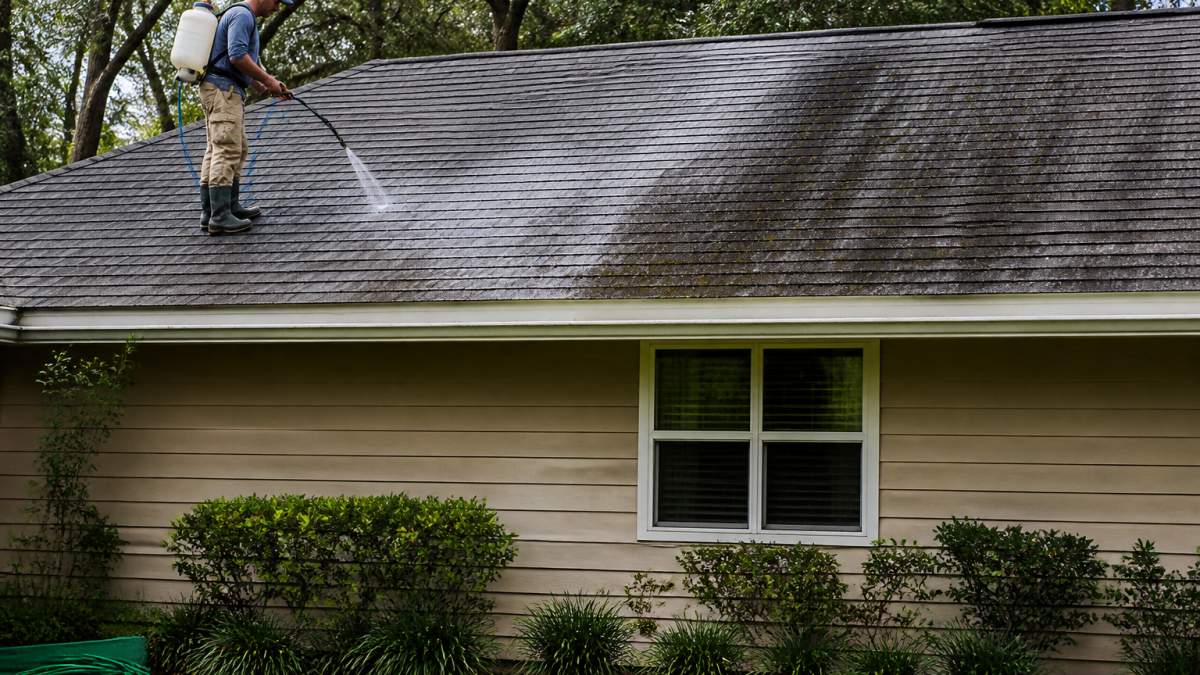
The process is simple. Apply the solution at low pressure, let it dwell, then rinse. The bleach kills the algae.
Soft washing works on asphalt shingles, tile, and metal roofs. Pressure washing does not.
Dwell Time and Rinsing: Getting the Timing Right
Dwell time is how long the solution sits on the roof before you rinse. Too short, and the algae survives. Too long, and you risk shingle damage.
- 15-20 minutes is the sweet spot for most bleach-based solutions.
- Check the shingles during dwell. If they look dry, re-spray.
- Rinse thoroughly with a garden hose at low pressure.
Expect the roof to look lighter immediately. Full results show up after a few rain cycles.
Can You Pressure Wash a Roof? What You Need to Know
No, you should not pressure wash a roof. Pressure washing forces water under shingles and strips the protective granules that protect asphalt.
The damage is often invisible at first. Over time, exposed shingle layers crack, curl, and fail. Most shingle manufacturers void warranties when pressure washing is used.
Use soft washing instead. The Asphalt Roofing Manufacturers Association advises against high-pressure cleaning on asphalt shingles.
| Method | Pressure Level | Safe for Shingles? | Best For |
|---|---|---|---|
| Soft wash | Low | Yes | Algae, mold, most roofs |
| Pressure wash | High | No | Concrete, driveways only |
| Hand scrub | None | Yes | Small, stubborn spots |
Preparing Your Roof and Protecting Your Landscaping
Prep work protects your plants, your siding, and your roof. Skip it, and you risk killing landscaping and staining your home.
- Cover plants near the roof with plastic sheeting.
- Wet down landscaping before and after cleaning to dilute runoff.
- Close windows and cover vents to keep spray out.
Runoff from bleach solutions can harm grass and shrubs. Always protect landscaping before you start.
Water your plants deeply the day before you clean. Wet soil dilutes bleach runoff, and a quick rinse afterward protects roots. This one step saves most landscaping.
Safety and Access: Deciding Whether to DIY or Hire Help
Roof cleaning is dangerous. Falls are the real risk, not the bleach. Decide honestly whether you can work safely on your roof before you mix a single batch of solution.
Fall-Hazard Basics Before You Climb
Most roof-cleaning injuries happen on the ladder, not the roof. A few rules cut the risk sharply:
- Keep three points of contact on the ladder at all times: two hands and one foot, or two feet and one hand.
- Set the ladder on firm, level ground and extend it at least three rungs above the roof edge.
- Tie off the ladder at the top when you can, so it cannot slide sideways.
Personal Protective Equipment
Bleach-based roof cleaners are corrosive. At minimum, wear:
- Chemical splash goggles (not just safety glasses) to keep mist out of your eyes.
- Nitrile or rubber gloves long enough to cover your wrists.
- A NIOSH-rated respirator with an acid-gas or organic-vapor cartridge if you are spraying overhead.
Weather and Timing Rules
- Do not spray in wind above about 10 mph. Drift carries bleach onto siding, cars, and neighbors’ plants.
- Do not spray in direct sun or when surface temperatures are high. The solution dries before it works and can bake residue into the shingles.
- Do not spray if rain is forecast within 24 hours. Rain washes the solution off before it kills the algae.
When Not to Climb at All
Hire a professional, or skip the roof entirely, if any of these apply:
- Pitch steeper than about 6:12. Walkable roofs are typically 4:12 or lower; anything steeper needs fall protection most homeowners do not own.
- Two or more stories. Ladder height, reach, and fall distance all become serious problems.
- Fragile, brittle, or older shingles. Walking on them can crack tabs and void warranties.
DIY vs. Pro: A Quick Decision Guide
| Situation | DIY | Hire a Pro |
|---|---|---|
| Single-story, low-pitch asphalt roof | Yes | Optional |
| Two-story or steep-pitch roof | No | Yes |
| Metal, tile, or slate roof | No | Yes |
| Delicate or aging shingles | No | Yes |
| Health or mobility limits | No | Yes |
| No safe ladder access | No | Yes |
If you can reach the roof safely from the ground with a sprayer and never step onto the shingles, that is often the safest DIY path. Many homeowners clean a single-story roof entirely from a ladder, spraying upward and letting gravity and rain do the rinsing.
Never work alone on a roof. Have a second adult on the ground who can call for help, hand you tools, and watch for runoff problems.
Crystal Clear Windows provides professional window cleaning and pressure washing services for both residential and commercial properties. Their comprehensive service offerings include roof cleaning, soft washing, and specialized cleaning for patios, pool areas, lanais, and driveways. With a passion for service, they deliver high-quality results that help you achieve a cleaner way of life.
Professional Roof Cleaning Cost and What to Expect
Professional roof cleaning cost depends on roof size, pitch, and stain severity. Most companies quote by square footage and access difficulty.
Rather than guess at a number, ask for a free estimate. A good provider inspects the roof first, then gives you a written quote.
What to expect from a pro job:
- A pre-cleaning walkthrough and plant protection
- Soft washing with a bleach-based solution
- Full rinse and cleanup
Ask about before-and-after photos. Any reputable provider should have them.
Preventing Black Streaks From Coming Back
Algae returns because the conditions that grew it never changed. Shade, moisture, and organic food on the shingles all feed new growth. Understanding the mechanism helps you slow it down instead of just reacting every time streaks appear.
Why Algae Comes Back
Gloeocapsa magma spreads by airborne spores. Even after a thorough cleaning, spores land on the roof again within weeks. The difference between a roof that stays clean for years and one that streaks again in months comes down to three factors:
- Sunlight. Algae grows fastest on shaded roof planes, especially north- and east-facing slopes under tree cover.
- Moisture. Roofs that stay damp longer, from poor drainage or heavy shade, support more growth.
- Food source. Asphalt shingles contain limestone filler that algae feed on. Older shingles with exposed filler are more vulnerable.
Realistic Prevention Timeline
- Immediately after cleaning: The roof looks lighter, but dead algae residue may continue to wash off for a few rain cycles.
- First 6-12 months: If conditions are unchanged, faint new streaking can begin on shaded slopes.
- 1-2 years: Most roofs in humid or shaded conditions need a preventive re-treatment.
A common pattern is to re-treat every 1-2 years as a preventive step, before streaks become heavy. A light preventive spray is faster and uses less solution than a full restoration cleaning.
Concrete Prevention Steps
- Trim tree branches to let more sunlight hit the roof. Aim for at least a few hours of direct sun on the worst-affected slope.
- Keep gutters and downspouts clear so water drains fast instead of sitting at the roof edge.
- Fix roof leaks and flashing problems that keep shingles damp.
How to Monitor for Early Regrowth
Check the roof twice a year, ideally in spring and fall:
- Look at north- and east-facing slopes first. These show streaks before sunnier planes.
- Check under tree cover and near valleys where debris collects.
- Look for faint gray or dark lines running with water flow. Catching them early means a lighter, cheaper treatment.
ENERGY STAR’s roof maintenance guidance notes that proper roof care extends shingle life. Regular cleaning and monitoring are part of that care.
Black streaks come back because the algae spores never fully leave. Cleaning kills the growth. Prevention, meaning sunlight, drainage, and periodic re-treatment, keeps it from returning. Plan on a light preventive treatment every 1-2 years on shaded slopes, and inspect twice a year to catch new growth early.
Frequently Asked Questions
What is the best way to remove algae from a roof?
A soft wash using a bleach-and-water solution is the most effective and safest method. Mix one part household bleach with three parts water, apply with a pump sprayer, let it dwell for 15 to 20 minutes, then rinse gently with a garden hose. This kills the algae without damaging asphalt shingles. For heavy growth, a second application may be needed. Always protect plants and wear protective equipment.
Can you pressure wash black streaks off a roof?
Pressure washing is not recommended for asphalt shingles. The high pressure can strip protective granules, loosen shingles, and void manufacturer warranties. Instead, use a soft wash approach with low pressure and a chemical cleaning solution. If you hire a professional, confirm they use soft washing rather than pressure washing. Pressure washing is only safe on certain hard surfaces like concrete or tile, not asphalt shingles.
How can you prevent black algae from returning to a roof?
After cleaning, install zinc or copper strips along the roof ridge. Rainwater carries metal ions down the roof surface, creating an environment where algae cannot grow. You can also apply a preventive treatment every 12 to 24 months. Keeping gutters clear and trimming overhanging tree branches helps reduce moisture and shade that algae need. Homes with algae-resistant shingles have better long-term protection.
When should you hire a professional to clean roof stains?
Hire a professional if your roof is steep, two stories or higher, or shows signs of damage like cracked or missing shingles. Professionals also have the right equipment and cleaning solutions to treat large areas safely. If you are unsure whether the stains are algae or something else, a professional inspection can confirm the cause. Professional roof cleaning cost varies by roof size and pitch, so request a free estimate.
Black streaks return fast when the root cause never changes. Crystal Clear Windows offers professional roof cleaning and soft washing with free estimates, safe low-pressure methods, and full landscaping protection. We handle both homes and businesses, and we back our work with before-and-after proof. Get a quote from Crystal Clear Windows and keep your roof clean for good.