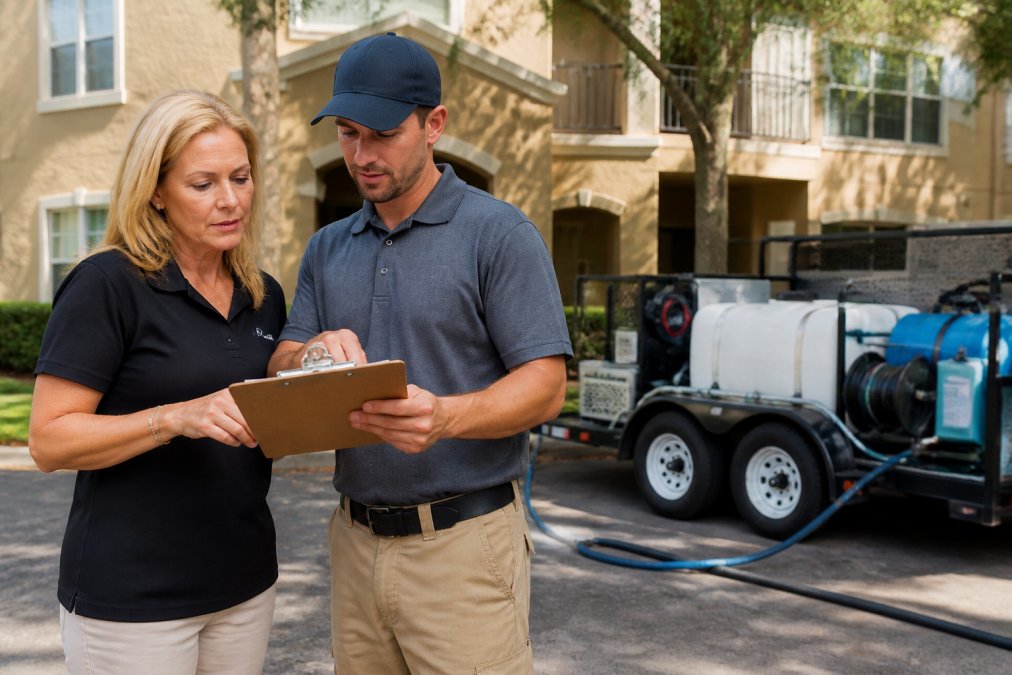
Best Pressure Washing Services Lakeland FL: 2026 Guide

Table of Contents

Last Updated: October 8, 2026

What Separates the Best Pressure Washing Services in Lakeland, FL

Finding the best pressure washing services in Lakeland, FL comes down to one thing: whether the company matches the cleaning method to the surface instead of blasting everything the same way. At Crystal Clear Windows, we’ve built our exterior cleaning work around that principle, and it’s the single biggest difference between a crew that protects your property and one that leaves damage behind.

Pressure washing services are professional exterior cleaning treatments that use water pressure, specialized equipment, and surface-specific methods to remove dirt, mold, mildew, and stains from roofs, driveways, siding, and patios. The best providers in Lakeland combine soft washing for delicate surfaces with high-pressure cleaning for durable ones.

Lakeland’s climate makes this matter more than in most markets. Heat and humidity feed algae and mildew year-round, and afternoon storms leave organic debris on roofs and driveways that comes back fast if it isn’t treated properly. Below, we break down how to tell a skilled provider from a cheap one, what a real quote should include, and the mistakes that cost homeowners the most.

Key Takeaway
The best exterior cleaning company in Lakeland isn’t the one with the highest pressure. It’s the one that asks what your roof, driveway, and lanai are made of before quoting a method.

Soft Washing Services vs. High-Pressure Cleaning: Which Surface Needs Which

Soft washing services use low pressure combined with cleaning solutions to kill mold, mildew, and algae at the root, while high-pressure cleaning uses mechanical force to strip away dirt and stains. Choosing the wrong method for a surface is the most common cause of property damage in this trade.
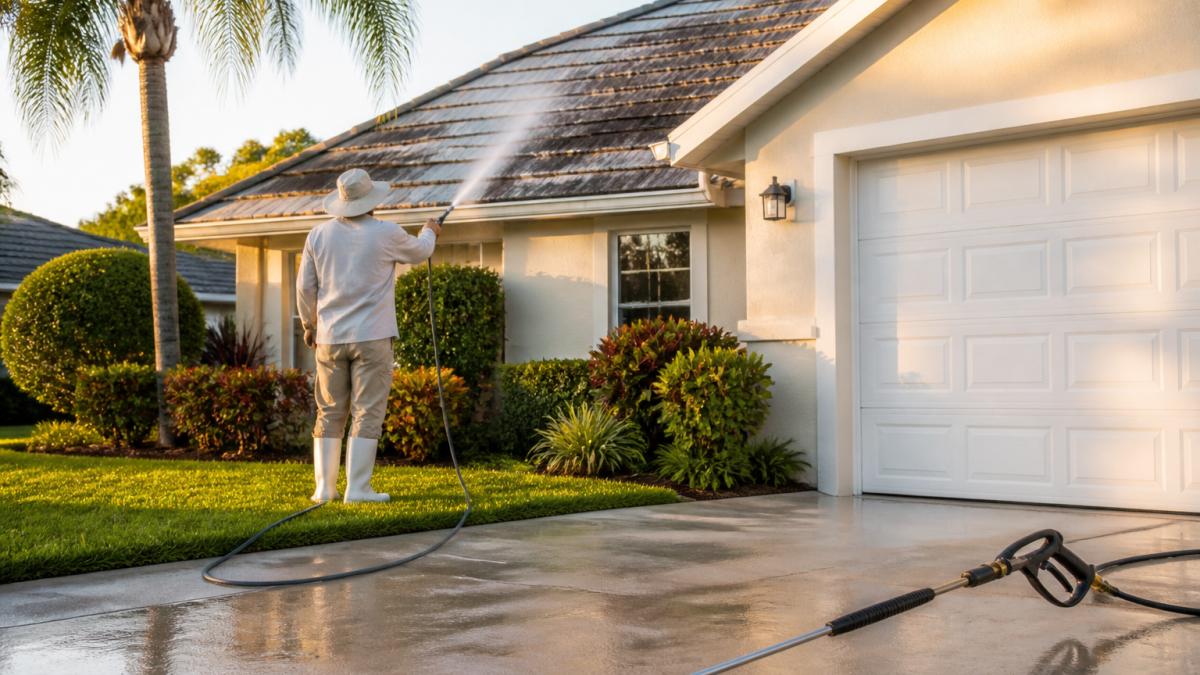
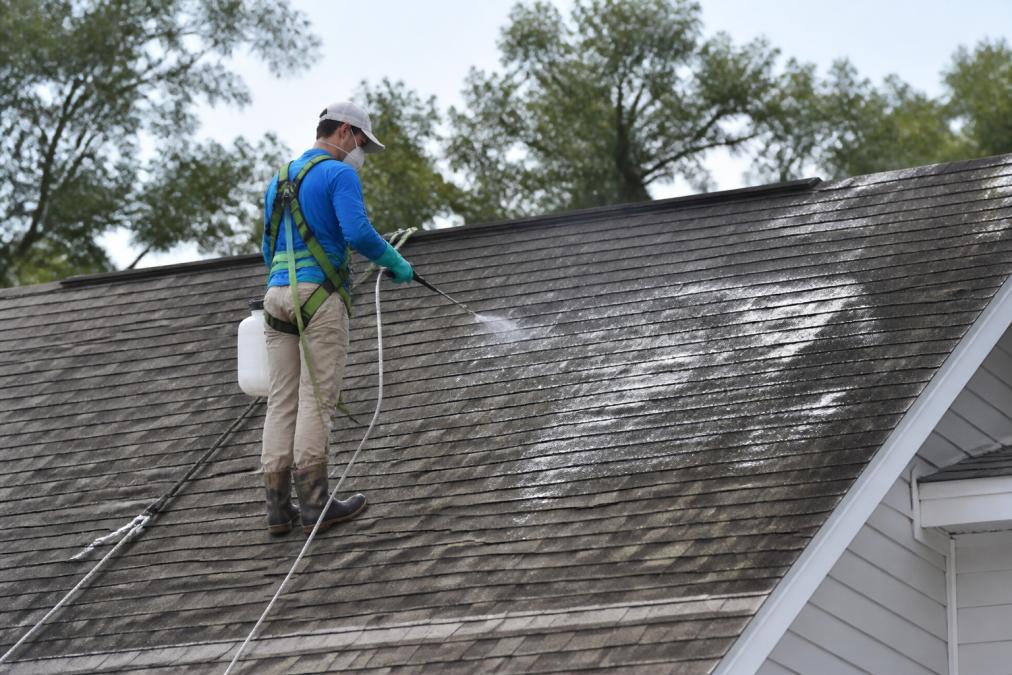
A technician in protective gear using a soft wash sprayer on a residential roof with visible black streaks, a pressure washer wand resting nearby on the driveway, late afternoon Florida sunlight

Surfaces That Need Soft Washing

Roof shingles top the list. Asphalt shingles lose protective granules under direct high pressure, and once those granules are gone, the shingle ages fast.

Other surfaces that call for soft washing:

  • Painted or vinyl siding
  • Lanai screens and enclosures
  • Pool cages and screen rooms
  • Wooden fences and decks
  • Stucco and older masonry

Surfaces That Handle High Pressure

Concrete driveways, sidewalks, and paver patios handle high pressure well because they’re dense and non-porous. Even here, technique matters. A skilled operator uses the right nozzle and keeps the wand moving to avoid etching stripes into the concrete.

Watch Out
The most expensive mistake we see is a homeowner hiring whoever quotes lowest, then watching a crew blast a shingle roof at full pressure. Losing granules voids many roof warranties and can shorten a roof’s life by years.

How to Choose a Pressure Washing Company in Lakeland

Learning how to choose a pressure washing company starts with three checks: proof of insurance, a clear explanation of methods, and references from local jobs. A provider who can’t answer all three confidently isn’t worth your driveway.

Ask for the company’s approach before you ask for a number. A professional will want to know the material of each surface and whether you’ve had prior treatments. That’s not stalling, it’s how a quote gets built correctly.

Questions to Ask Before You Hire

  • Are you insured, and can you provide a certificate?
  • Which surfaces will you soft wash versus pressure wash, and why?
  • Can you share before-and-after photos from similar Lakeland properties?
  • Do you treat for algae and mildew, or just rinse the surface?
  • How do you protect plants, screens, and outdoor furniture during the job?

If a company hesitates on any of these, keep looking. The U.S. Environmental Protection Agency guidance on safe cleaning product use is a useful reference for understanding what responsible chemical handling looks like on residential jobs.

What a Pressure Washing Quote Should Include

A complete pressure washing quote should list each surface to be cleaned, the method used for each, any pre-treatment or post-treatment, and the scope of what’s excluded. If a quote is a single lump-sum number with no breakdown, you can’t compare it fairly against another provider.

Here’s how to read a quote line by line:

Quote Element What It Should Say Red Flag If Missing
Surface list Each area named separately Vague “exterior cleaning”
Method per surface Soft wash or high pressure, specified One method for everything
Treatment Algae or mildew treatment included Rinse-only language
Protection Plants, screens, furniture covered Nothing mentioned
Insurance Coverage confirmed in writing No documentation

Pricing depends on square footage, surface type, buildup level, and access. We provide free estimates so you get a real number for your property instead of a guess over the phone.

Pro Tip
Walk your property with the estimator and point out every surface you care about, including the lanai and pool deck. Surfaces left off the original walkthrough are the ones that turn into awkward change orders later.

Pressure Washing Services for Homes and Businesses in Lakeland

Residential and commercial exterior cleaning follow different rhythms. Homes need seasonal attention, while commercial properties need scheduled maintenance that keeps appearances consistent year-round.

get a quote →

Residential Exterior Cleaning

For homeowners, the highest-value targets are the roof, driveway, and pool area. Roof cleaning removes the black streaks that algae causes, and soft washing services handle them without harming shingles. Driveways and walkways respond well to high pressure, and lanais need a gentler touch because of the screening and painted frames.

Commercial and Property Management Contracts

Property managers typically need recurring service rather than one-off jobs. A scheduled contract keeps sidewalks, entryways, and building exteriors presentable and prevents small stains from becoming permanent. For HOA communities, documented recurring cleaning also helps resolve violation notices before they become fines.

If you’re a property manager with multiple buildings, ask about a maintenance schedule rather than a single visit. Consistent intervals beat emergency cleanings every time.

Common Mistakes Homeowners Make With Exterior Cleaning

The biggest mistake is treating every surface the same. Pressure washing is not a universal tool, and the damage from using it on the wrong material often shows up weeks later, not immediately.

Other mistakes we see often:

  • Skipping the algae treatment and rinsing only, so streaks return within months
  • Cleaning a roof once and never scheduling it again
  • Ignoring the lanai and pool deck until buildup stains permanently
  • Choosing a provider on price alone without checking insurance
  • Waiting until an HOA notice arrives to book service

A common mistake is assuming one cleaning solves the problem forever. In Lakeland’s humidity, organic growth returns, and a maintenance interval of roughly once a year keeps surfaces ahead of it.

Best For
Homeowners in HOA communities who need documented, recurring exterior cleaning to stay ahead of violation notices and fines.

Conclusion: Getting the Best Results for Your Lakeland Property

Choosing well comes down to method, not muscle. A provider who soft washes your roof, pressure washes your driveway, and treats algae at the source will protect your property far better than one who blasts everything at full force.

Crystal Clear Windows provides pressure washing and window cleaning for homes and businesses across Lakeland, with soft washing, roof cleaning, and specialized work on patios, pool areas, lanais, and driveways. We offer free estimates, so you know exactly what your property needs before any work begins.

Call or text for a free quote, and we’ll walk your property, explain which method each surface needs, and give you a clear scope of work.

Frequently Asked Questions

How do I choose a reliable pressure washing company in Lakeland, FL?

Look for a company that offers both pressure washing and soft washing services, since different surfaces need different methods. Ask for proof of insurance, check for local references or before-and-after photos, and confirm they have experience with Florida-specific issues like mold, mildew, and HOA requirements. A reputable provider will offer a free estimate and explain which cleaning method they recommend for each surface before starting work.

What should a pressure washing quote include?

A thorough pressure washing quote should list every surface to be cleaned, the method for each (soft wash or high pressure), and any prep work like covering plants or outlets. Get the quote in writing. Most companies in Lakeland offer free estimates.

When should a home be soft washed instead of pressure washed?

Soft washing uses low pressure with cleaning solutions to safely remove mold, mildew, and algae from delicate surfaces like roof shingles, stucco, painted siding, and screened lanais. High pressure is better for concrete driveways, brick patios, and pool decks. In Lakeland’s humid climate, roof shingles and painted exteriors should almost always be soft washed to avoid voiding warranties or causing water damage. Ask your provider to confirm which method they will use on each surface.

Can pressure washing damage siding, roofs, or concrete?

Yes, if the wrong method or too much pressure is used. High pressure can strip paint, crack stucco, force water behind siding, and tear shingles. Concrete is more durable but can be etched if the nozzle is too close or the pressure too high. That is why soft washing services exist for delicate surfaces. A trained technician will adjust pressure and use appropriate cleaning solutions for each material. Always ask about their approach before hiring.
Is Soft Washing Safe for Lanais? A Complete Guide

Table of Contents

Last Updated: October 5, 2026

Is Soft Washing Safe for Lanais? What You Need to Know

The question of is soft washing safe for lanais comes up often, and the answer is yes, it’s the method we recommend for almost every screen enclosure.

The key difference comes down to pressure. A standard pressure washer pushes water at thousands of pounds per square inch.

The good news is that soft washing avoids nearly all of these issues when it’s done right.

Below, we’ll walk through how soft washing works, how it compares to pressure washing, and exactly how to clean your lanai safely.

Soft Washing vs Pressure Washing Lanai: Key Differences

Soft washing and pressure washing differ mainly in how they clean. Soft washing removes grime with low pressure and a cleaning solution. Pressure washing removes grime with high pressure and water alone.

That single difference changes everything for a lanai.

  • Soft washing: Low pressure, cleaning solution, safe for screens and paint
  • Pressure washing: High pressure, water only, risky for mesh and finishes
  • Best for lanais: Soft washing, almost every time

Screen mesh is the fragile part. High pressure can stretch, tear, or pop screens right out of their frames. It can also strip paint and finish from aluminum, which then leads to corrosion.

Soft washing treats the algae and mildew at the root instead. According to the U.S. Environmental Protection Agency’s guidance on safe cleaning products, choosing the right cleaning product matters as much as the method itself.

Key Takeaway
For lanais, pool cages, and screen enclosures, soft washing is the safer choice. High pressure is the fastest way to damage screens and painted frames.

How to Clean Lanai Screens: Step-by-Step Instructions

Cleaning lanai screens safely comes down to preparation, the right solution, and patience. Rushing with high pressure is what causes damage. The steps below reflect how a typical professional soft-wash job is sequenced.

What You’ll Need

  • A pump sprayer (1-2 gallon) or a dedicated soft-wash system with a downstream injector
  • A mild, biodegradable cleaning solution labeled safe for aluminum and screen mesh
  • A soft-bristle brush (a car-wash or flag-tipped brush works well)
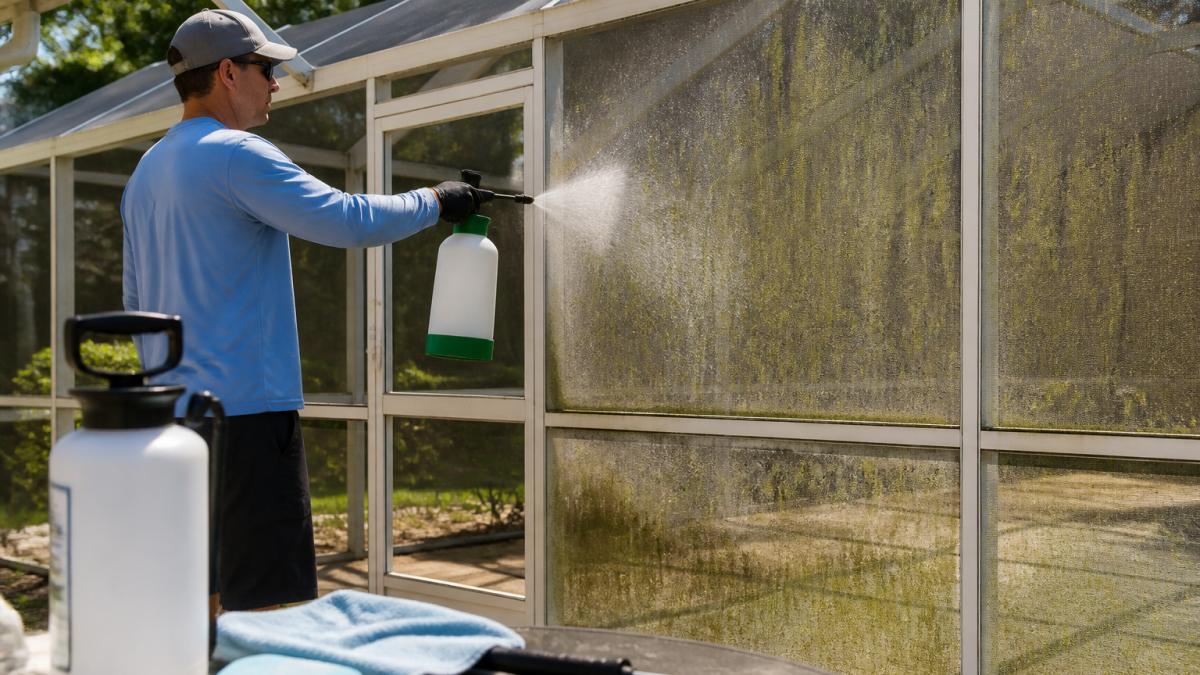
A person using a pump sprayer to apply cleaning solution to a lanai screen enclosure, with green algae visible on the mesh and aluminum frame, bright afternoon sunlight

Step-by-Step Cleaning Process

  1. Clear the area. Move furniture, grills, and pool toys at least 10 feet away from the screens. Anything you can’t move, cover.
  2. Protect nearby surfaces. Drape plastic sheeting over shrubs, flower beds, and any painted or stained surfaces within splash range. Weight the edges so wind doesn’t lift them.
  3. Pre-rinse the screens. Wet the mesh and frames with plain water from the top down. This loosens surface dust and pre-saturates the screen so the cleaning solution doesn’t dry too fast.
  4. Mix your solution. Follow the label directions exactly. A common dilution for a mild, biodegradable lanai cleaner is roughly 1 part concentrate to 10 parts water, but the label always wins. Mix in a bucket first, then pour into the sprayer.
  5. Apply from the bottom up. Start at the lowest point of the screen panel and work upward. Spraying bottom-up prevents streaking, because the solution doesn’t run down over dry mesh and leave lines.
  6. Let it dwell. Give the solution 5-10 minutes of contact time. On a hot, sunny day, work in sections so the solution doesn’t dry on the screen, dried solution can leave a residue that’s harder to rinse than the algae was.
  7. Brush gently if needed. Use a soft brush on stubborn spots, especially along the bottom rail and corners where algae collects. Never scrub hard enough to stretch the mesh.
  8. Rinse thoroughly. Rinse from the top down with low pressure. Keep the nozzle at least 12-18 inches from the screen and use a fan pattern, not a pencil stream. A pencil stream at close range is the single most common cause of torn screens.
  9. Inspect and repeat. Once the screens dry, walk the enclosure and look for missed patches. Treat them again rather than scrubbing harder.

The dwell time matters more than most people expect. Letting the solution sit for several minutes does more than scrubbing ever will. For more on safe exterior cleaning methods, the Centers for Disease Control and Prevention’s cleaning and hygiene resources offer useful background on handling cleaning products safely.

Pro Tip
Work in the morning or late afternoon. Direct midday sun can dry the solution before it finishes working, which forces you to reapply and doubles your water use.

Screen-Specific Technique

Screen mesh is the part most likely to be damaged, so it deserves its own approach. A few rules of thumb:

  • Never aim a pressure washer directly at the mesh. Even a low-pressure setting can tear a screen if the nozzle is close enough.
  • Spray at an angle, not straight on. Angling the spray lets water pass through the mesh instead of pushing against it.
  • Support the screen from behind if you can. A second person holding a flat board behind the panel absorbs the force and protects the spline.

Rinsing Without Over-Wetting

Rinsing is where a lot of DIY jobs go wrong. The goal is to carry the loosened algae and solution off the screen, not to blast it. Use a gentle fan spray, work top-down, and keep moving. If water is pooling at the base of the enclosure, you’re using too much, switch to shorter passes and let the runoff drain between them.

Safe Lanai Cleaning Solution: Dilution, Dwell Time, and Material Compatibility

A safe lanai cleaning solution is one that’s mild, biodegradable, and mixed at the right strength. Too strong, and it can harm plants or dull aluminum. Too weak, and it won’t kill the algae.

Here’s how we think about the three key factors:

  • Dilution: Always follow the label. More is not better.
  • Dwell time: Let the solution sit long enough to work, usually several minutes.
  • Compatibility: Check that the solution is safe for aluminum, screen mesh, and paint.

Aluminum frames are usually powder-coated or painted. Harsh chemicals can dull or strip that finish. Screen mesh is even more sensitive, so stick with products labeled safe for delicate materials.

Watch Out
Never mix cleaning products together. Combining bleach with ammonia or acids can create dangerous fumes. Use one product at a time and rinse between applications.

How Often to Clean a Lanai: Schedule and Prevention

Most lanais need a full soft wash once or twice a year. In humid climates with heavy pollen and algae growth, you may need it more often. The schedule below is a starting point, not a rule, the right frequency depends on how much shade, moisture, and organic debris your enclosure sees.

get a quote →

What Drives How Often You Need to Clean

Algae and mildew need three things to grow: moisture, warmth, and a food source. A lanai provides all three. The variables that push you toward more frequent cleaning are:

  • Shade. Screens that stay shaded most of the day hold moisture longer and grow algae faster than sun-exposed screens.
  • Tree and shrub proximity. Plants touching or overhanging the screens drop pollen, sap, and leaf litter that feed growth.
  • Pool and irrigation spray. A pool cage or a lanai next to sprinkler heads stays wetter and needs more attention.

A Practical Cleaning Schedule

Frequency Task Why It Matters
Monthly Rinse screens and frames with a hose Stops pollen and dust from setting into a film that feeds algae
Every 3 months Inspect for algae, mildew, and spline wear Catches growth early, before it stains the mesh
Twice a year Full soft wash Removes deep grime and kills algae at the root
After storms Inspect and rinse Clears debris, pollen, and any organic matter blown in
Before pollen season Pre-treat screens A light application slows buildup during the worst weeks

Prevention That Actually Works

Prevention is the cheapest cleaning you’ll ever do. A quick monthly rinse keeps algae from taking hold. Beyond that, a few habits make a real difference:

  • Trim back plants that touch the screens. Anything brushing the mesh traps moisture against it and feeds growth.
  • Keep the pool and irrigation spray off the screens. Adjust sprinkler heads so they don’t hit the enclosure.
  • Fix leaks and drainage issues. Standing water near the base of the lanai keeps the bottom rail wet.
Key Takeaway
If you can rinse your screens once a month and do a full soft wash twice a year, you’ll stay ahead of algae in most climates. In heavy shade or near water, plan on quarterly soft washing instead.

When to Call a Professional

If your lanai is large, two stories up, or already showing heavy algae and mildew, a professional soft wash is usually faster and safer than a DIY attempt. Pros have the equipment to reach high panels, the experience to match the solution to your screens and frames, and the ability to rinse without over-wetting your pool or landscaping. If you’re not sure whether your screens can handle cleaning at all, have them inspected first, that’s a much cheaper conversation than replacing a torn screen enclosure.

Protecting Plants, Pets, Pools, and Nearby Surfaces

Protecting your surroundings is part of doing the job right. Cleaning solution that runs off a lanai can reach plants, pets, and your pool.

Here’s how to keep everything safe:

  • Plants: Cover them with plastic sheeting and rinse afterward.
  • Pets: Keep them indoors until everything is dry.
  • Pools: Cover the pool or check chemical levels after rinsing.

Even biodegradable products can harm plants at full strength. Rinsing thoroughly after the job is the simplest safeguard. For guidance on keeping pool water balanced after cleaning, the U.S. Consumer Product Safety Commission’s pool safety information is a helpful reference.

When Soft Washing Is Not Appropriate: Risks and Limitations

Soft washing isn’t right for every situation. There are times when it can cause more harm than good.

  • Torn or brittle screens: Old mesh may fall apart during cleaning.
  • Bare, unpainted metal: Some finishes need special care.
  • Electrical fixtures: Water and wiring near a lanai need caution.

If your screens are already failing, cleaning won’t fix them. Repair or replace them first, then clean. A quick inspection before you start saves a lot of frustration.

Pro Tip
Test your solution on a small, hidden area first. It takes a minute and tells you whether the product is safe for your specific screens and frames.

Post-Cleaning Inspection and Troubleshooting

A post-cleaning inspection is how you confirm the job worked and catch problems early. Walk the whole enclosure once everything is dry.

Check for these issues:

  • Streaks or spots: Usually a sign of uneven rinsing.
  • Missed algae: Green or black patches that need another treatment.
  • Loose screens: Mesh that pulled free during cleaning.

Most problems trace back to one of three things: too little dwell time, too little rinsing, or a solution that was too harsh. Fix those, and the next cleaning goes smoother.

If your lanai has stubborn buildup or you’d rather leave it to a professional, Crystal Clear Windows offers soft washing for lanais, pool areas, and patios. We also handle window cleaning, roof cleaning, and driveway washing for homes and businesses.

Frequently Asked Questions

What is the best way to clean a lanai screen?

The best way to clean a lanai screen is with soft washing. Apply a safe cleaning solution, let it dwell for 5-10 minutes, then rinse with low pressure. This removes algae and mildew without damaging the screen mesh or aluminum frames. Avoid high pressure, which can tear screens and strip paint.

What surfaces can you not use sodium hypochlorite on?

Sodium hypochlorite should not be used on certain surfaces like natural stone, some metals, and delicate plants. For lanais, it’s safe on screens and aluminum when diluted properly, but avoid contact with nearby landscaping. Always test a small area first and protect surrounding surfaces.

Is soft washing safe for lanai screens and frames?

Yes, soft washing is safe for lanai screens and frames when done correctly. Low pressure and biodegradable solutions clean without causing damage. High pressure can tear screens and chip paint, so soft washing is the recommended method for these delicate materials.

How often should a house be soft washed?

Most houses should be soft washed every 12-24 months, depending on local conditions. In areas with high humidity or frequent rain, annual cleaning may be needed to prevent algae and mildew buildup. Lanais and pool cages often require more frequent attention.


Cleaning a lanai shouldn’t put your screens, paint, or landscaping at risk. Soft washing gets the job done safely, and it’s the method we trust for every enclosure we clean. Crystal Clear Windows brings professional soft washing, roof cleaning, and exterior cleaning to homes and businesses, with free estimates and results that last. Get a quote from Crystal Clear Windows and enjoy a cleaner outdoor living space.

Book Driveway Pressure Washing in Lakeland: 2026 Guide

Table of Contents

Last Updated: October 4, 2026

How to Book Driveway Pressure Washing in Lakeland

Booking driveway pressure washing in Lakeland starts with one simple choice: call, text, or send an online request. At Crystal Clear Windows, we take bookings all three ways, and most homeowners pick whichever fits their day.

Here’s the part most people get wrong: they wait until the stains look terrible before reaching out.

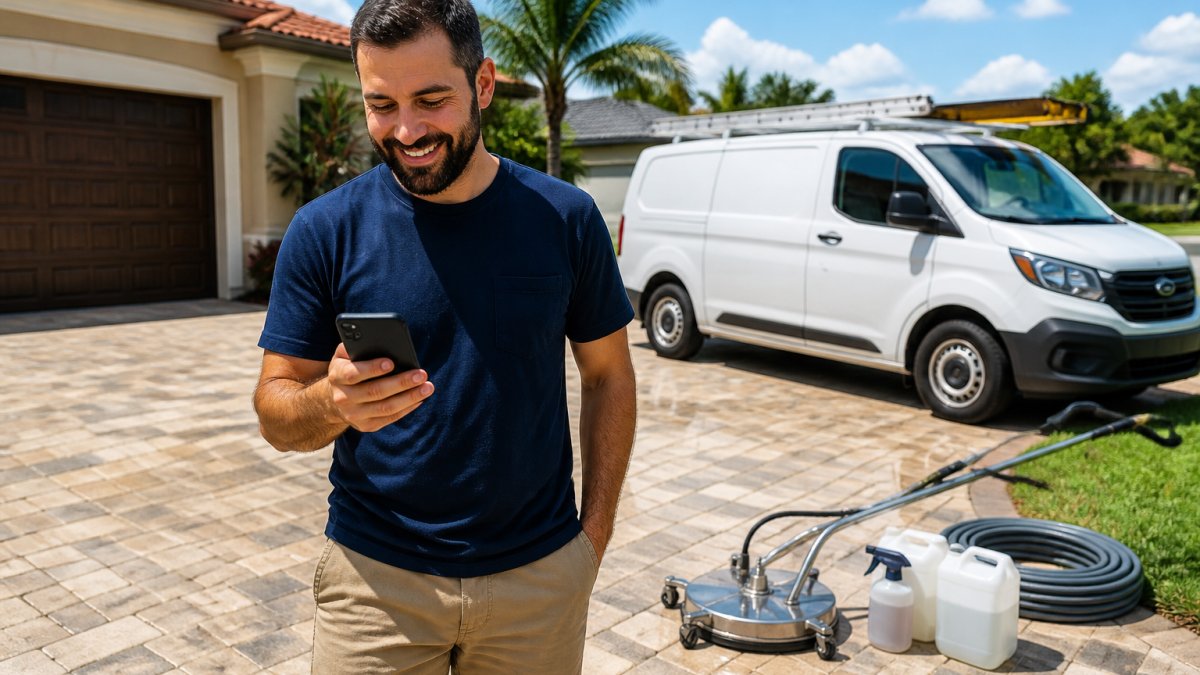
A homeowner standing in a residential driveway holding a smartphone, with a pressure washing service van parked in the background on a sunny Florida day

Online Booking vs. Phone and Text Requests

Online booking works best when you want to send photos and pick a time without a phone call. Phone and text requests work best when you have questions about stains, surfaces, or scheduling. We handle all three the same way: you tell us what you need, we confirm a window, and we show up.

Texting is often the fastest option for busy homeowners. You can snap a photo of the driveway, mention any problem spots, and get a reply without sitting on hold.

Step-by-Step: How to Book Your Driveway Cleaning

Most homeowners move through the same five steps. Here is what to expect from first contact to confirmed appointment:

  1. Reach out. Call or text 863-845-3304, or send an online request. If you text, include your address and a photo of the driveway from the street.
  2. Share the details. Tell us the approximate driveway size, the surface type (standard concrete, stamped concrete, or pavers), and any problem stains like oil, rust, or hard-water marks.
  3. Get your estimate. We review the photos and details, then send a written estimate. If anything is unclear, we may ask for one more photo or a quick measurement.
  4. Pick your window. We offer morning and afternoon arrival windows. If you have an HOA deadline or an event, tell us the date so we can prioritize it.
  5. Confirm and prepare. You’ll get a confirmation with your date, arrival window, and a short prep checklist. Reply to confirm, and you’re set.

What to Have Ready Before You Request a Quote

A quick quote goes faster when you have a few details on hand. Have your address, the approximate size of the driveway, and any photos ready. Mention whether the surface is standard concrete, stamped concrete, or pavers, since each one is cleaned differently.

Also note any hard-water stains, oil spots, or HOA deadlines. If your community has sent a notice about driveway stains, tell us the date. It helps us prioritize your appointment.

Pro Tip
Text a photo of the driveway from the street and one close-up of the worst stain. It usually saves a back-and-forth and gets you a faster, more accurate estimate.

How to Confirm and What Happens Next

Once you approve the estimate, we lock in your arrival window and send a confirmation. The day before your appointment, you’ll get a reminder so you can move vehicles and clear the slab. If rain is in the forecast, we’ll reach out about rescheduling, pressure washing works best on a dry surface, and we don’t want to waste your time or ours.

If your plans change, just call or text. We’d rather move your appointment than have you rush. Group bookings are welcome too, if neighbors want their driveways cleaned the same day, mention it when you book and we’ll coordinate the schedule.

Is Pressure Washing Safe for Concrete Driveways?

Pressure washing is safe for most concrete driveways when the technician matches the pressure and nozzle to the surface. The danger isn’t the machine; it’s the technique.

The U.S. Environmental Protection Agency’s guidance on outdoor water use notes that runoff from exterior cleaning can carry pollutants into storm drains, which is one reason professional crews manage water carefully. Safe cleaning also means protecting nearby plants, siding, and vehicles.

Standard concrete handles pressure washing well. Stamped concrete, pavers, and older, cracked slabs need a gentler approach. We adjust the nozzle, the spray distance, and the pressure setting for each surface.

When Soft Washing Is the Better Choice

Soft washing is the better choice for delicate or stained surfaces that high pressure could damage. It uses lower pressure with specialized cleaning solutions to break down dirt, algae, and mildew instead of blasting them off.

Pavers, stamped concrete, painted surfaces, and lanais are common soft washing candidates. If your driveway has decorative finishes or visible cracking, ask about soft washing before you book.

How to Prepare a Driveway for Pressure Washing

Preparing a driveway for pressure washing takes about ten minutes and protects your property. Move vehicles, bikes, and trash bins off the slab. Close windows near the driveway and bring in pets for the duration of the visit.

Clear small items like planters, toys, and mats. If you have potted plants along the edges, we can cover or move them, but flagging them ahead of time helps. Trim back any low branches that could block the spray path.

  • Move all vehicles and trailers off the driveway
  • Bring pets and pet bowls inside
  • Close windows and doors facing the driveway
  • Remove planters, toys, and mats
  • Note any cracks, stains, or problem areas for the crew
Watch Out
Don’t water the driveway right before your appointment to “loosen” dirt. Wet concrete makes it harder to see stains and can hide oil spots that need pre-treatment.

Driveway Pressure Washing Duration: What to Expect

Driveway pressure washing duration depends on size, surface type, and how much staining there is. A standard two-car concrete driveway usually takes one to two hours. Larger driveways, heavy staining, or soft washing can take longer.

Here’s how the time typically breaks down:

Driveway Type Typical Time Notes
Small single-car concrete 45-60 minutes Light dirt, minimal staining
Standard two-car concrete 1-2 hours Most common residential job
Large or circular driveway 2-3 hours More square footage to cover
Stamped concrete or pavers 2-3 hours Soft washing, gentler method
Heavy staining or oil spots Add 30-60 minutes Pre-treatment required

Plan to keep the driveway clear for a few hours after the crew finishes. Concrete dries fairly quickly in Florida sun, but you’ll want to avoid driving on it until it’s dry.

Driveway Cleaning Pricing Factors and Quote Details

Driveway cleaning pricing depends on size, surface type, stain severity, and any add-ons you request. We don’t post flat prices because no two driveways are identical. Instead, we give you a free estimate based on what we see.

get a quote →

Factors that affect your quote:

  • Square footage of the driveway
  • Surface type (standard concrete, stamped concrete, or pavers)
  • Stain severity, including oil, rust, or hard-water stains
  • Add-ons like sidewalk cleaning, patio cleaning, or house washing
  • Access and any obstacles the crew needs to work around

How Each Factor Moves Your Quote

Size is the starting point, but it’s rarely the biggest driver. Here’s how the main factors typically play out:

  • Square footage. A single-car driveway covers far less ground than a circular drive, so time and water use scale with area. Most residential driveways fall into three rough bands: small (single-car), standard (two-car), and large (three-car or circular).
  • Surface type. Standard concrete is the fastest and simplest to clean. Stamped concrete and pavers take longer because they need a gentler method and often a second pass to lift dirt from the joints and texture.
  • Stain severity. Light dirt and algae rinse off quickly. Oil, rust, and hard-water stains usually need a pre-treatment and dwell time before washing, which adds labor.
  • Add-ons. Sidewalks, patios, and house washing are often bundled at a lower combined rate than booking them separately, since the crew is already on site.
  • Access. A driveway blocked by parked cars, low branches, or a narrow gate slows the crew down and can change the estimate.

What a Written Estimate Should Include

A written estimate protects both sides. Before you approve anything, make sure it spells out:

  1. The scope of work, what surfaces are being cleaned and what is not included.
  2. The method, standard pressure washing, soft washing, or a combination.
  3. Any pre-treatment for oil, rust, or hard-water stains.
  4. Whether post-treatment (like sealing) is included or quoted separately.
  5. The date, arrival window, and payment terms.

If an estimate is verbal only, ask for it in writing. It’s the easiest way to avoid surprises on the day of service.

Group Booking Discounts

Group booking discounts are available when neighbors schedule together. If several homes on your street need driveway maintenance, ask about a per-home price.

Why We Don’t Post Flat Prices

Flat prices don’t survive contact with real driveways. Two homes on the same street can have the same square footage but very different surfaces, staining, and access. A posted price would either be too high for the easy job or too low for the hard one, and neither is fair. A free estimate based on photos and details is the most accurate way to quote your specific driveway.

How to Choose a Driveway Washing Provider in Lakeland

Choosing a driveway washing provider comes down to three things: surface knowledge, clear communication, and proof of past work. Any company can rent a pressure washer. Not every company knows how to treat stamped concrete or remove hard-water stains without damage.

Ask these questions before you book:

  1. Can you show before-and-after photos of similar driveways?
  2. How do you handle stamped concrete or pavers?
  3. What’s included in the estimate, and what costs extra?
  4. Do you carry insurance?
  5. What happens if I’m not satisfied with the results?

A local provider who works in your area regularly will know the common stains, the water conditions, and the surfaces. That local knowledge matters more than a low bid.

Best For
Homeowners and property managers who want a local team that handles driveways, sidewalks, patios, and house washing in one visit.

What to Do After Your Driveway Cleaning Appointment

After your driveway cleaning appointment, keep the surface clear until it’s fully dry. Check the results in daylight, and note any spots that need a second pass.

If something doesn’t look right, contact the provider within a day or two. Reputable companies will address concerns. We stand behind our work and want you to be satisfied with the results.

For long-term driveway maintenance, plan a cleaning once or twice a year. Regular cleaning prevents stains from setting in and keeps your curb appeal sharp. If you’re in an HOA community, staying ahead of stains helps you avoid fines.

Frequently Asked Questions

How do I book driveway pressure washing in Lakeland?

You can book driveway pressure washing in Lakeland by calling or texting 863-845-3304, or by requesting a free estimate online. Have your address, driveway size, and surface type ready.

Is pressure washing safe for concrete driveways?

Yes, pressure washing is safe for most concrete driveways when the technician uses the correct nozzle and spray distance. A wide fan setting at a safe distance prevents surface damage. Older or cracked concrete may need lower pressure or soft washing instead. Always tell your provider about existing cracks, previous sealant, or stamped concrete so they can adjust the cleaning technique.

How should I prepare my driveway for pressure washing?

Move vehicles, bikes, and planters off the driveway before the crew arrives. Close windows near the work area and cover any outdoor outlets. Trim back low-hanging plants. Clear the area of pet toys and delicate items. If you have oil stains, point them out so the technician can apply a degreaser before the main cleaning. Most providers handle the rest.

How long does driveway pressure washing take?

Driveway pressure washing duration depends on the size of the driveway, the severity of staining, and any additional services requested. It also depends on whether the provider applies a post-treatment for hard-water stains or algae.

Can pressure washing remove oil stains from a driveway?

Pressure washing alone may not fully remove deep oil stains. A quality provider will pre-treat oil spots with a degreaser, let it dwell, then pressure wash with a wide fan setting. Some stains require a second treatment. For best results, book service before the stain sets, and ask whether your provider includes degreaser application in the quote.


Driveway stains don’t fix themselves, and HOA notices won’t wait. Crystal Clear Windows offers free estimates, professional pressure washing and soft washing, and a team that knows how to treat concrete, pavers, and stamped surfaces safely. We also handle roof cleaning, house washing, and patio and lanai cleaning, so you can knock out your whole exterior in one visit. Get a quote from Crystal Clear Windows and get your driveway looking its best.

Call or text us today 863-845-3304

Residential Roof Soft Wash Quote: 2026 Cost Guide

Table of Contents

Last Updated: October 1, 2026

What a Residential Roof Soft Wash Quote Actually Covers

A residential roof soft wash quote is a written estimate itemizing the labor, chemicals, and equipment needed to clean your roof using low-pressure application rather than high-pressure blasting. Crystal Clear Windows provides free estimates, so you can see exactly where the money goes before you commit.

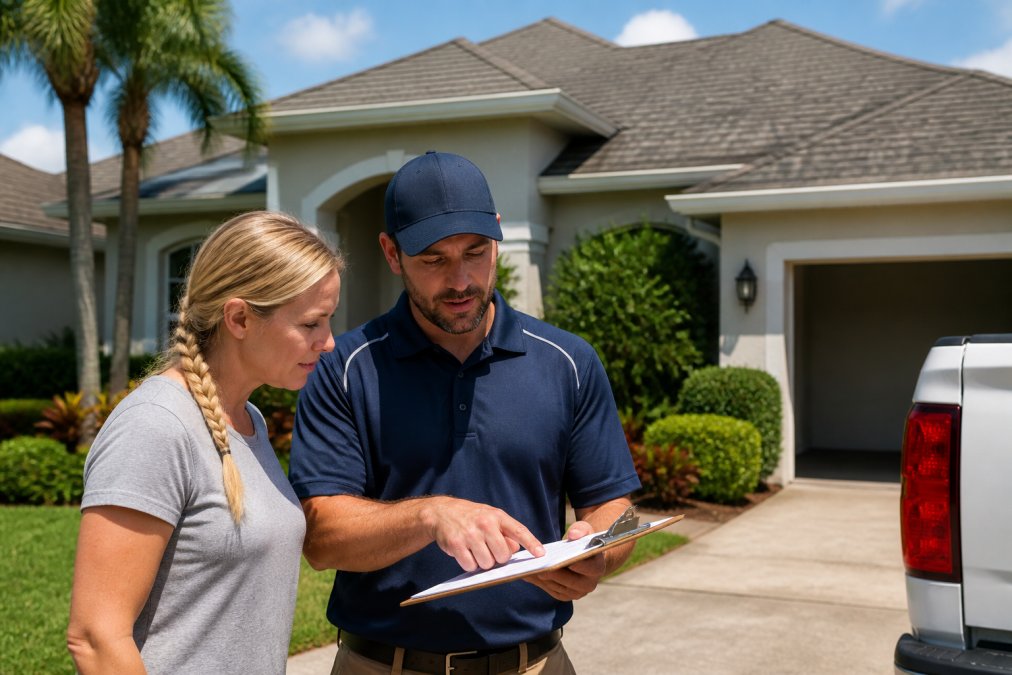
Technician reviewing a roof soft wash quote with a homeowner on a sunny driveway in front of an asphalt roof.

Line-Item Breakdown of a Typical Estimate

A credible estimate separates each part of the job. Ask for these line items:

  • Square footage and roof pitch – the two measurements that drive most of the price
  • Chemical mix – sodium hypochlorite concentration plus surfactants
  • Labor and equipment – pump sprayers, hoses, protective gear
  • Gutter protection – covering or rinsing to keep runoff out of downspouts
  • Landscaping prep – wetting plants before and rinsing after

Virtual vs. On-Site Quote Accuracy

Virtual quotes, usually generated from satellite imagery, are fast but approximate, missing roof pitch, fragile shingle edges, and how much organic growth has taken hold.

Average Cost of Roof Soft Washing in 2026

Pricing depends on square footage, roof pitch, chemical strength, and local labor rates, so no single national figure applies. Crystal Clear Windows provides free estimates tied to your actual roof rather than a generic average.

Soft Wash vs. Pressure Washing: Why the Price Differs

Soft washing costs more than pressure washing because it takes longer and uses more chemistry: a technician applies the solution, lets it dwell, and rinses, often across two visits for stubborn algae.

Factors That Move Your Quote Up or Down

Factor Pushes Price Up Pushes Price Down
Roof size Large square footage Compact roof
Roof pitch Steep, hard to walk Low-slope, walkable
Growth type Heavy moss removal Light algae staining
Access Multi-story, tight lot Single-story, open yard
Frequency First cleaning in years Regular maintenance plan

How to Prepare for a Roof Cleaning Estimate

Preparing for a roof cleaning estimate means clearing access, documenting what you see, and knowing which roof conditions change the price. A little prep makes the visit faster and the quote more accurate.

Your Pre-Quote Inspection Checklist

  • Clear vehicles from the driveway and trim back branches from the roof edge
  • Photograph visible staining from the ground for your own records
  • List roof age and any past repairs
  • Check gutters for granule buildup, a sign of shingle wear
  • Identify outdoor plants, lanais, or pool areas near runoff paths
  • Ask whether the company carries licensing and insurance documentation

What to Actually Look For on the Roof (Before You Call)

Most homeowners can spot the four conditions that move a quote from the ground with binoculars.

  • Gloeocapsa magma (black streaks). These are cyanobacteria feeding on the limestone filler in asphalt shingles. They start on the north-facing slope and spread. Surface color is a poor gauge of severity, the organism roots into the mat, so a roof that looks lightly streaked from the street can be heavily colonized underneath.
  • Moss. Moss holds moisture against the shingle, lifts edges, and lets water wick under courses. If it peels up in sheets, the shingle underneath is often already compromised, and the quote should include a shingle-condition caveat.
  • Lichen. Crusty gray-green patches bond tightly to granules. Lichen is the hardest growth to remove and usually signals a roof that has been wet for years.
  • Granule loss. Check the gutters and the ground at the downspout outlets. A heavy accumulation of sandy grit means the shingles are aging out, and cleaning will not restore them.

Red Flags That Should Change Your Quote Request

A few conditions mean the job is not a standard soft wash and the quote should say so in writing:

  • Cracked, curling, or missing shingles, cleaning may dislodge them, and the contractor should note this before starting.
  • Active leaks or ceiling stains inside, soft washing will not fix a leak and can make it worse.
  • Rusted or loose flashing around chimneys, vents, and skylights.
  • A roof older than roughly 20 years on a standard asphalt shingle system. At that age, cleaning is often cosmetic and the money is better put toward replacement.

Questions to Ask Before the Visit

  • What cleaning method do you use, and will it be listed on the written estimate?
  • Do you carry general liability and workers’ compensation coverage, and can you send a certificate before the visit?
  • How do you protect landscaping, gutters, and any pool or water feature near the runoff path?
  • Is the quote firm, or does it change once someone is on the roof?
  • Do you offer any maintenance plan, and does it lock in a rate?
Pro Tip
Ask for the certificate of insurance by email before the appointment, not on the day of. A company that can produce it in minutes is organized; one that promises to “bring it later” is telling you something.

How to Remove Moss From Asphalt Shingles Before Your Quote

Moss removal before a quote helps you see the true condition of your asphalt shingles and gives the contractor a cleaner surface to assess. Do not scrape or pressure wash it off yourself, since that damages the shingle mat.

Watch Out
Never use a pressure washer on asphalt shingles to remove moss. The high-pressure stream strips protective granules and voids most shingle manufacturer warranties, turning a cleaning job into a roof replacement.

Vetting a Roof Soft Wash Contractor: Licensing, Insurance, and Warranty

Vetting a contractor comes down to four checks: licensing and insurance, chemical handling, warranty implications, and the paper trail that protects you if something goes wrong.

Roof Warranty Implications of Soft Washing

Soft washing performed to manufacturer guidelines generally does not void an asphalt shingle warranty, but pressure washing and improper chemical use can.

get a quote →

  • No high-pressure washing that strips granules or forces water under shingle edges.
  • No harsh solvents or abrasive methods that damage the shingle surface.
  • Reasonable maintenance, which most manufacturers interpret to include removing organic growth before it compromises the mat.

What to do about it:

  • Ask your contractor which cleaning method they use and get it in writing on the estimate. “Soft wash, low pressure, sodium hypochlorite-based” is the language you want.
  • Keep the estimate, the invoice, and any before-and-after photos. If a claim ever comes up, that documentation is your evidence the roof was maintained properly.
  • If your roof is still under a workmanship warranty from the installer, read that contract too. Some installers add their own exclusions for any third-party cleaning.
  • When in doubt, call the shingle manufacturer’s technical line with your product name and ask directly. They will tell you what their warranty allows.
Watch Out
A high-pressure wash on asphalt shingles can strip the protective granule layer in a single pass. That damage is visible, permanent, and one of the most common reasons a manufacturer denies a later warranty claim. If a contractor’s quote mentions “pressure washing” for a shingle roof, walk away.

Chemical Safety and Environmental Impact

Sodium hypochlorite is the active ingredient in most soft wash mixes, typically diluted to roughly 1% to 6% depending on the severity of growth. It is effective against gloeocapsa magma, moss, and lichen, but harsh on plants, pets, and aquatic life if it runs off unchecked.

What a responsible contractor does:

  • Pre-wets landscaping before application and rinses thoroughly afterward. Dry plants absorb more chemical; saturated soil dilutes what reaches the roots.
  • Covers or diverts gutters so chemical-laden runoff does not flow straight into storm drains, which in most municipalities discharge to local waterways without treatment.
  • Uses surfactants that help the solution cling to the roof surface instead of running off immediately, which reduces the total volume needed.
  • Times the application to avoid windy days and to allow adequate dwell time before rinsing.
  • Protects pets and people by keeping them off treated surfaces and out of runoff paths until the roof has been rinsed and dried.

Documentation to Collect Before Work Starts

  • Certificate of insurance (general liability and workers’ compensation)
  • Written estimate listing method, chemical type, and scope
  • Any state or local license number, if your area requires one
  • A signed agreement that names the cleaning method
  • Before-and-after photos, ideally taken by the crew
Key Takeaway
The warranty question is not a formality. A soft wash done to manufacturer guidelines usually preserves coverage; a pressure wash or an overly strong chemical mix can quietly void it. Get the method in writing, keep the paperwork, and you protect both the roof and your ability to file a claim later.

GAF warranty and maintenance guidelines for asphalt shingle roofs

Soft Washing vs. DIY: When a Quote Is Worth It

A professional soft wash quote is worth it whenever your roof has organic growth, steep pitch, or a warranty you want to keep. DIY cleaning with a garden sprayer and store-bought bleach rarely reaches the root of gloeocapsa magma and often damages shingles or plants.

Key Takeaway
For most homeowners, the deciding factor is not price but risk. Soft washing protects shingle integrity and roof longevity in a way DIY methods rarely match, and a proper quote documents the method used.

Frequently Asked Questions

How much should it cost to soft wash a roof?

Pricing depends on roof size, pitch, and organic growth severity, so most contractors price per square foot rather than a flat rate. A single-story home with light algae staining sits at the lower end, while steep, heavily stained roofs with moss cost more. Crystal Clear Windows provides free estimates, so request a quote for a figure tied to your specific roof.

What factors influence a residential roof soft wash quote?

Square footage, roof pitch, shingle type, and how much algae, moss, or lichen has taken hold all shift the number. Accessibility matters too: tall two-story homes, steep slopes, and landscaping that needs protection add labor. A line-item estimate should separate chemical treatment, labor, and any gutter or plant protection so you can compare quotes fairly.

Is soft washing a roof worth the investment?

Soft washing uses low pressure and sodium hypochlorite-based solutions to kill algae at the root, including gloeocapsa magma, the organism behind those black streaks. Because it removes the growth rather than just bleaching it, results typically last longer than pressure washing and help preserve roof longevity. Many homeowners see improved curb appeal and property value as a direct result.

How often should a roof be soft washed?

Most residential roofs benefit from soft washing every 2 to 3 years, though humid climates and shaded roofs may need it more often. Scheduling preventative maintenance before staining becomes severe keeps costs predictable and protects asphalt shingles. A technician can recommend a realistic interval after inspecting your roof during the quote visit.


Roof staining, moss, and black streaks come back if the root cause is never treated, and choosing the wrong method can cost you a warranty claim. Crystal Clear Windows handles residential and commercial roof cleaning, soft washing, and exterior surface care with a professional, service-first approach and free estimates. Get a quote from Crystal Clear Windows and protect your roof with a cleaning method built for asphalt shingles.

Remove Hard Water Spots From Glass Windows: 2026 Guide

Table of Contents

Last Updated: September 29, 2026

Why Hard Water Spots Form on Glass Windows

Hard water spots on glass windows are mineral deposits left behind when water evaporates and leaves calcium and magnesium on the surface. Rain, sprinklers, and garden hoses all carry these dissolved minerals. When the water dries, the minerals stay put and bond to the glass.

Florida’s water supply is especially rich in calcium, which is why so many homeowners here battle spotting on windows, lanais, and pool enclosures year-round.

The Difference Between Mineral Deposits and Glass Etching

Mineral deposits are a layer of calcium and magnesium sitting on top of the glass. They can be removed.

Here’s how to tell them apart:

  • If the spot fades when wet, it’s a deposit
  • If it stays visible when wet, it may be etching
  • If you can feel a raised bump, it’s a deposit
  • If the surface feels pitted or rough, it’s likely etched

What You’ll Need: Tools and Cleaning Agents

The right tools make this job faster and safer. Grab these before you start:

  • White vinegar (the workhorse for mineral scale)
  • Baking soda (for a mildly abrasive paste)
  • Dish soap (a few drops for grease cutting)
  • Spray bottle
  • Microfiber cloths (at least two)
  • Squeegee
  • Non-scratch pad or synthetic steel wool (0000 grade)
  • Bucket of clean water
  • Rubber gloves
Pro Tip
Test your squeegee on a small corner first. A worn or nicked rubber blade drags grit across the glass and leaves fine scratches that show up in direct sunlight.

Step-by-Step: How to Remove Hard Water Spots From Glass Windows

This process works on most exterior glass, windshields, and shower doors. Work in shade, never in direct sun. Heat makes solutions dry too fast and can cause streaking.

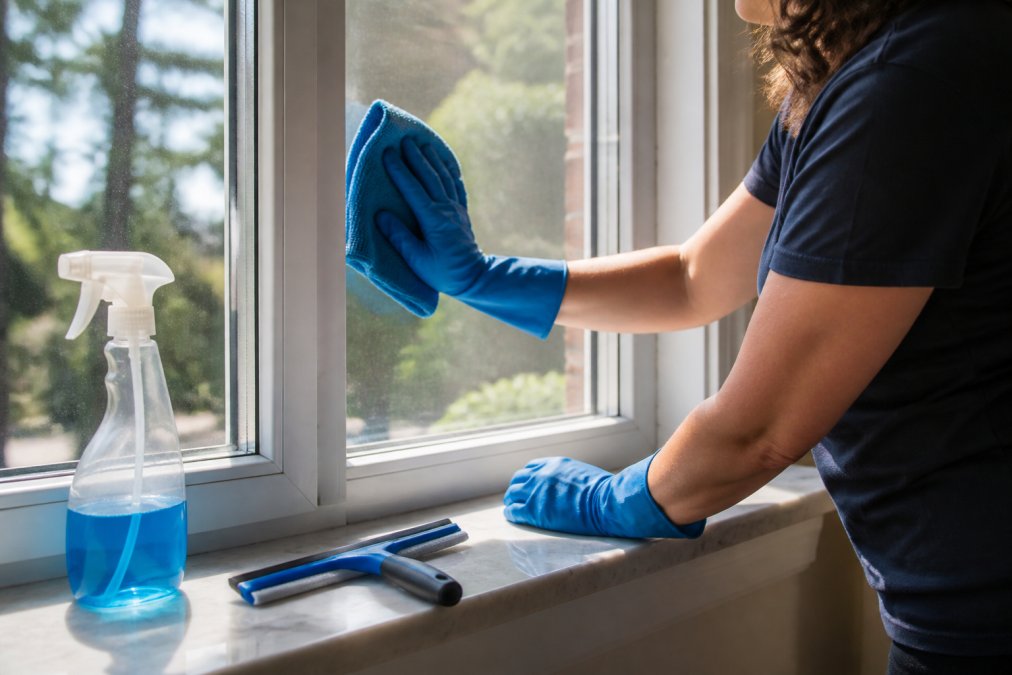
Person in rubber gloves cleaning glass with a microfiber cloth to remove stubborn hard water spots

Step 1: Test a Small Area First

Spray your chosen solution on a small corner. Wait a minute. Wipe it dry with a microfiber cloth.

Step 2: Apply Your Cleaning Solution

For light spots, mix equal parts white vinegar and water in a spray bottle. Spray the glass and let it sit for a few minutes. This dwell time lets the acidic solution break down the calcium buildup.

Step 3: Agitate and Rinse

Work the solution in small circles. Don’t scrub hard. Let the chemistry do the work, not your elbow.

Watch Out
Never mix vinegar with bleach-based cleaners. The chemical reaction releases toxic gas. If you’re unsure what’s already on the glass, rinse it fully before switching products.

Best Hard Water Stain Remover for Glass: DIY vs. Commercial Options

The best hard water stain remover for glass depends on how bad the buildup is and what kind of glass you’re treating. Here’s how the options compare:

Option Best For Dwell Time Risk Level
Vinegar and water Light, fresh spots 3-5 minutes Very low
Baking soda paste Medium mineral scale 5-10 minutes Low (mildly abrasive)
Commercial acid cleaners Heavy, set-in deposits Per label Medium (needs gloves, ventilation)
Synthetic steel wool Stubborn spots after soaking N/A Medium (can scratch if rushed)

Why the Chemistry Matters

Vinegar is acetic acid, typically around 5% concentration in the grocery-store bottle. It dissolves calcium carbonate by converting it into soluble calcium acetate, which rinses away. That reaction is why dwell time matters more than scrubbing: the acid needs a few minutes of contact to break the mineral bond.

/get-quote-btn/ →

Match the Remover to the Glass Type

Not every glass surface tolerates the same approach. This is where most guides stay vague, and where the wrong choice causes real damage:

  • Tempered glass (common in shower doors and patio doors) is heat-treated for strength but still vulnerable to abrasive scratching. Stick with vinegar or a non-scratch pad.
  • Low-E coated glass has a thin metallic oxide film that reflects heat. Abrasive pads and strong acids can strip or haze that coating. Use the mildest option that works, and never use synthetic steel wool.
  • Automotive windshields are laminated and often carry a hydrophobic factory coating. Acid cleaners can degrade the coating over time. A dedicated automotive glass cleaner or diluted vinegar is safer.
  • Untreated exterior window glass is the most forgiving. Most DIY and commercial options are fine here.

When DIY Stops Working

For glass that’s been spotted for years, the honest answer is that no off-the-shelf product may fully restore it. If vinegar, baking soda, and a commercial acid cleaner have all failed after proper dwell times, the deposit may have etched into the glass. That’s when professional help makes sense, not because a pro has a secret product, but because they can confirm whether the damage is removable or permanent before you spend more time and money.

How to Prevent Hard Water Spots on Windows

Prevention is cheaper than removal. A few habits keep mineral deposits from taking hold:

  • Dry glass immediately after rain or watering
  • Use a squeegee after every wash
  • Redirect sprinklers away from windows and siding
  • Apply a hydrophobic protective coating to slow mineral bonding
  • Rinse pool deck splash-off before it dries on nearby glass

Prevention by Glass Type

Prevention isn’t one-size-fits-all. The right routine depends on what the glass is and where it sits:

  • Low-E coated windows: Skip abrasive pads and acidic cleaners entirely. A squeegee and a pH-neutral glass cleaner preserve the coating that does the energy-saving work. Once that film is scratched, the window loses efficiency and the damage is permanent.
  • Tempered shower doors: These see daily soap scum plus mineral scale. A squeegee after every shower is the single highest-impact habit. A hydrophobic coating formulated for shower glass extends the interval between deep cleans.
  • Automotive windshields: Park facing away from sprinklers when possible. If you can’t, a quick rinse with a hose and a microfiber dry beats letting hard water bake on in the sun. Avoid parking under trees that drop sap, which bonds to glass much like mineral scale.
  • Exterior windows near irrigation: The water source is the real problem. Adjust sprinkler heads so they arc away from the house, and run irrigation in the early morning so any overspray dries before the heat of the day accelerates bonding.

Managing Runoff When You Clean

Acidic cleaners, vinegar included, don’t belong in your garden beds at full strength. A few practical habits keep the runoff from doing collateral damage:

  • Rinse the glass with plain water after the acid dwells, and direct that rinse toward a driveway, sidewalk, or lawn area that can tolerate a diluted acid.
  • Keep vinegar and commercial acid cleaners away from the drip line of acid-loving plants like azaleas, rhododendrons, and blueberries, which are already sensitive to pH swings.
  • Never pour leftover cleaning solution down a storm drain. Storm drains typically flow untreated to local waterways, and many municipalities treat that as an environmental violation.
  • If you’re cleaning a large glass surface, work in sections so you can control where the runoff goes rather than letting it sheet across the whole yard.
Key Takeaway
The single best prevention step is drying glass fast. Minerals can only bond when water sits and evaporates. Remove the water, remove the problem. But match your method to the glass type, and mind where the runoff lands, the wrong cleaner on coated glass or in a garden bed creates a second problem while solving the first.

Common Mistakes to Avoid When Cleaning Glass

Most failed attempts come down to a few repeat mistakes:

  1. Cleaning in direct sun. Solution dries before it works. Always work in shade.
  2. Skipping the spot test. You risk scratching glass or wasting hours on etched surfaces.
  3. Scrubbing too hard. Pressure doesn’t remove minerals. Dwell time does.
  4. Using abrasive pads on coated glass. You can strip the coating and make spotting worse.
  5. Leaving cleaner residue. It dries into new streaks and attracts more dust.

When to Call a Professional

Some jobs aren’t worth the risk. Call a pro when:

  • Spots remain after several DIY attempts
  • The glass feels pitted or rough (possible etching)
  • You’re dealing with second-story or hard-to-reach windows
  • You have a large property with multiple buildings
  • The buildup covers pool enclosures, lanais, or commercial storefronts

Frequently Asked Questions

Can hard water stains be permanent on glass?

Yes, hard water stains can become permanent if left untreated. The minerals in hard water, primarily calcium and magnesium, can bond with the glass surface over time. This process, called etching, creates microscopic pits that trap the minerals. Once etching occurs, the damage is permanent and cannot be removed by cleaning alone. Regular cleaning and prevention are key to avoiding this outcome.

What is the best hard water stain remover for glass?

The best hard water stain remover for glass depends on the severity of the stains. For light mineral deposits, a mixture of white vinegar and water works well. For tougher stains, a commercial product designed specifically for hard water or a paste of baking soda and water can be effective. Always test any product on a small, inconspicuous area first to ensure it does not damage the glass.

How do you prevent hard water spots from returning on exterior windows?

Preventing hard water spots involves minimizing contact with hard water. After cleaning, use a squeegee to remove water immediately. Consider installing a water softener or using a water filtration system for your outdoor spigots. Applying a hydrophobic coating to the glass can also help repel water and minerals. Regular maintenance cleaning, especially after rain or sprinkler exposure, is essential.

Is it safe to use vinegar on glass windows?

Yes, vinegar is generally safe for glass windows. Its acidic nature helps dissolve mineral deposits without damaging the glass. However, avoid using vinegar on tinted windows or those with a special coating, as the acid can degrade these surfaces. Always dilute vinegar with water and test on a small area first. Rinse thoroughly after use to prevent any residue.


Hard water spots are stubborn, but they’re beatable with the right method and a little patience. The catch is that etched glass can’t be reversed, so acting early matters. Crystal Clear Windows offers professional window cleaning, soft washing, and exterior maintenance for residential and commercial properties, backed by free estimates and a service-first approach. Get started with Crystal Clear Windows and keep your glass clear year-round.

How to Remove Oil Stains from a Concrete Driveway

Table of Contents

Last Updated: September 28, 2026

What You’ll Need Before You Start

Removing oil stains concrete driveway surfaces leave behind is easier with the right supplies. Concrete is porous, so oil sinks in fast and sets within hours, acting quickly matters more than buying expensive products.

Here is what to have ready:

  • Rubber gloves and eye protection
  • Kitty litter or baking soda
  • Liquid dish soap and laundry detergent
  • A stiff bristle brush
  • A bucket and garden hose
  • Concrete degreaser
  • A pressure washer (optional)
  • Concrete sealer
Pro Tip
Cornstarch works just as well as kitty litter for fresh spills. Most people have it in the pantry already.

Step 1: Identify the Stain and Prepare the Surface

Before you touch the stain, figure out what you are fighting. Motor oil, synthetic oil, brake fluid, transmission fluid, and hydraulic fluid each behave differently, and the wrong method can set a stain permanently or spread it.

Match the Method to the Fluid Type

Fluid Type What It Looks Like Why It Behaves That Way Best First Move
Conventional motor oil Dark brown to black, soft edges, oily sheen when fresh Heavy hydrocarbons sit near the surface and absorb slowly Absorbent powder first, then dish soap paste
Synthetic oil Thin, gray-black, spreads wider than you expect Smaller molecules penetrate faster and deeper into pores Solvent-based degreaser with extended dwell time
Brake fluid Amber to clear, often with a faint chemical smell Glycol-based; it pulls moisture and can etch or discolor concrete Flush with water fast, then water-based degreaser, avoid solvent on fresh brake fluid
Transmission fluid Distinct red or reddish-brown tint Dye and additive package can leave a permanent tint even after the oil is gone Degreaser plus repeat absorbent cycles; expect some residual color
Hydraulic fluid Yellow to amber, thin, spreads quickly Low viscosity means it wicks outward and downward fast Absorbent immediately, then solvent degreaser
Grease Thick, tacky, holds shape High viscosity keeps it on top but it smears when scrubbed Scrape off the bulk first, then degreaser

If you cannot tell what leaked, assume synthetic, the hardest common case, and the method that works on it also works on conventional oil.

Fresh vs. Set-In: The Timing Test

A fresh stain looks wet and dark; a set-in stain looks dry, gray-black, and faded at the edges. The practical test: press a clean white paper towel onto the stain. If oil transfers, absorbents will do most of the work. If the towel comes up clean but the stain is still dark, the oil has soaked into the pores and you need a chemical degreaser with real dwell time.

Read the Severity Before You Choose a Method

Use this quick decision path:

  • Light sheen, no color depth → absorbent powder, then dish soap. Done in under an hour.
  • Dark stain, paper towel test positive → absorbent powder, then degreaser. Half a day.
  • Dark stain, paper towel test negative, less than a year old → solvent degreaser, extended dwell, stiff brush, possibly two rounds.
  • Decades-old stain or one that keeps returning after cleaning → poultice method (see below) or professional service.
  • Stain larger than a few square feet, or multiple overlapping stains → treat as a professional job; DIY results are usually uneven.

The Poultice Method for Deep-Set Stains

For oil fully cured into the slab, a poultice pulls it back out. Mix an absorbent powder, diatomaceous earth, fuller’s earth, or finely ground kitty litter, with enough solvent degreaser to make a thick paste. Spread it a quarter-inch thick, cover with plastic wrap, tape the edges, and let it sit 24 hours.

Clearing and Prepping the Surface

Good surface prep makes every later step work better. Sweep away dirt, leaves, and grit. If the stain sits near a garage or gutter, block the runoff path with sandbags or towels to keep oil out of storm drains, which most states regulate under clean water rules.

  • Move vehicles and toys off the slab
  • Sweep the whole area, not just the stain
  • Check the weather: pick a dry, mild day with no rain in the forecast for 24 hours
  • Test any cleaner on a hidden spot first, especially on colored or stamped concrete
  • Note the ambient temperature; most degreasers lose effectiveness below about 50°F

EPA guidance on stormwater runoff and pollution

Step 2: Try Household Remedies for Oil Stains

Household remedies handle most fresh stains and many light set-in ones. Start here before buying a heavy-duty degreaser. You will save money and avoid harsh fumes.

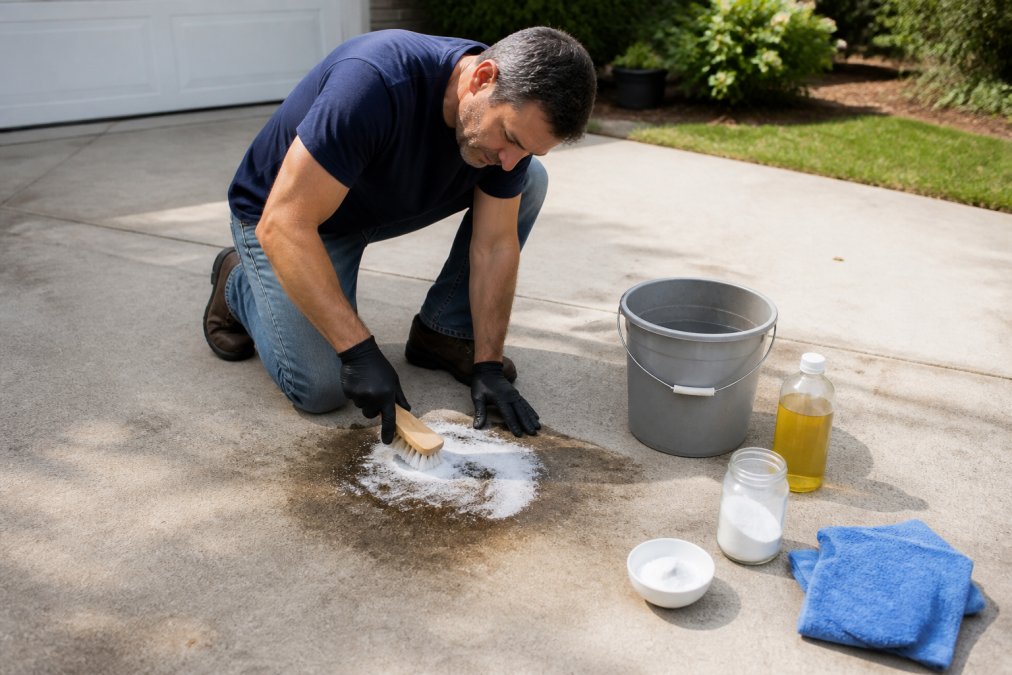
Homeowner scrubbing a baking soda paste onto oil stains concrete on a driveway with a bristle brush

Baking Soda and Kitty Litter Absorbents

Baking soda and kitty litter pull oil up out of the concrete. Cover the stain with a thick layer, press it in with your shoe, let it sit several hours, then sweep it up. Repeat until the powder stops turning dark. On fresh spills, this alone can remove most of the oil.

Dish Soap and Laundry Detergent Pastes

Mix liquid dish soap or laundry detergent with warm water to a paste. Spread it over the stain, let it dwell 15 to 30 minutes, scrub with a stiff bristle brush in circles, then rinse well and check the results.

Watch Out
Never mix bleach with ammonia-based cleaners. The chemical reaction creates toxic fumes that can send you to the hospital.

Step 3: Apply the Best Concrete Degreaser for Driveways

When household methods fall short, a dedicated degreaser is the best concrete degreaser for driveways with heavy or old stains. These products break down grease at the molecular level so water rinses it away.

Choosing Between Solvent-Based and Water-Based Degreasers

Water-based degreasers are safer for plants and pets and work well on fresh stains and light grease. Solvent-based degreasers cut deeper into porous surface and handle brake fluid, transmission fluid, and other automotive fluid. Pick solvent-based for old, dark stains; water-based for routine upkeep.

Degreaser Type Best For Dwell Time Safety Notes
Water-based Fresh stains, light grease 10-20 min Pet and plant friendly
Solvent-based Old, deep-set stains 20-45 min Ventilate, wear gloves
Citrus-based Everyday spot treatment 15-30 min Mild odor, slower acting

Dwell Time and Scrubbing Technique

Dwell time is how long the cleaner sits before you scrub. Most people skip this step, and it shows. Give the degreaser 15 to 45 minutes, depending on the product. Keep it wet; do not let it dry out.

Key Takeaway
The single biggest reason DIY oil removal fails is rushing the dwell time. Let the product sit and the scrubbing gets easier.

Step 4: Pressure Washing Concrete Driveway Oil Stains

Pressure washing oil stains concrete driveway surfaces collect removes loosened oil and leftover residue in one pass, the fastest way to finish, but only after the degreaser has done its work.

Get A Quote →

Rinsing, Disposal, and Protecting Surface Integrity

Rinse the whole slab with clean water, working toward the street or a drain you can block. Never let oily runoff flow into storm drains or waterways. Sweep up absorbent material and bag it for trash pickup. Check with your local waste office on disposal rules for solvent-soaked rags.

Pro Tip
A turbo nozzle is tempting for stubborn stains, but it can carve grooves in concrete. Stick with the 25-degree tip.

Step 5: Seal the Concrete to Prevent Future Stains

This is the step almost every guide skips, and it determines whether you are back out here next month. Cleaning opens the pores of the concrete, and unsealed concrete is a sponge, a single drip from a warm engine can soak in within minutes. Sealing closes those pores so oil sits on top long enough to wipe up.

Penetrating vs. Film-Forming Sealers

There are two families of concrete sealer, and they do different jobs:

Sealer Type How It Works Best For Trade-Offs
Penetrating (silane/siloxane) Soaks into the pores and chemically bonds with the concrete Driveways, garages, any surface that takes traffic Breathable, no surface film, does not change appearance; needs reapplication every few years
Film-forming (acrylic, polyurethane, epoxy) Lays a protective coating on top of the slab Showroom floors, decorative concrete, high-stain-risk areas Stronger stain resistance and a gloss finish; can peel, scuff, or yellow, and is harder to repair

When to Seal, and When Not To

Wait at least 48 hours after cleaning before sealing, longer in humid or cool weather, the slab must be fully dry. Test by taping a 2-foot square of plastic sheeting to the concrete overnight. If condensation forms underneath, the slab is still releasing moisture and the sealer will not bond.

Do not seal if:

  • Rain is forecast within 24 hours
  • The slab is new, wait at least 28 days for the concrete to cure
  • Temperatures will drop below the sealer manufacturer’s minimum (commonly 50°F)
  • The surface still has visible oil residue; sealing over oil traps the stain and prevents future sealer from bonding

Application That Actually Lasts

Apply with a roller or low-pressure sprayer in thin, even coats. Two thin coats outperform one heavy coat every time, a thick coat pools, skins over, and peels. Keep a wet edge to avoid lap marks. Most penetrating sealers need two coats with a few hours of dry time between them; check the label, because formulations vary.

Maintenance and Reapplication

The water-bead test tells you when to reseal: pour a cup of water on the slab. If it beads and rolls off, the sealer is still working. If it soaks in within a minute or two, reapply. For most driveways that is every two to three years, more often in high-UV climates or heavy traffic.

  • Choose a penetrating silane/siloxane sealer for driveways
  • Apply in mild, dry weather with no rain in the forecast
  • Never seal over damp concrete or over an uncleaned stain
  • Recheck the finish each spring with the water-bead test
  • Reapply before the next winter, not after, de-icing salts and freeze-thaw cycles accelerate wear on an unsealed slab
Key Takeaway
Sealing is the difference between a driveway you clean once and a driveway you clean every few months. It is the highest-leverage hour you will spend on this job.

When to Hire Professional Pressure Washing Services

Some stains are not worth a weekend of scrubbing. Decades-old oil, large commercial spills, and stains that keep returning usually need professional pressure washing services, as do HOA deadlines, delicate surfaces, and large driveways.

Concrete care guidance from the Portland Cement Association

Common Mistakes to Avoid

Most failed oil removal comes down to a handful of repeat errors:

  • Scrubbing a dry stain before applying any cleaner
  • Using a wire brush that scratches the concrete
  • Letting degreaser dry on the surface
  • Pressure washing at full blast on a fan-free tip
  • Skipping the sealer after cleaning
  • Rinsing oil into a storm drain

Storm drain and runoff rules from the EPA

Frequently Asked Questions

Does WD-40 remove oil stains from concrete?

WD-40 can lift light, fresh oil stains because its solvent base breaks down grease. Spray it directly on the stain, wait a few minutes, then scrub with a stiff bristle brush and rinse. For older or deep-set stains, it works better as a pre-treatment before applying a dedicated concrete degreaser. Always test on a small area first, and keep it away from plants and storm drains since it is not environmentally friendly.

Are oil stains permanent on concrete?

Most oil stains are not permanent, but concrete is a porous surface, so oil penetrates deeply and can leave a shadow even after cleaning. Fresh stains come out with absorbents and degreasers. Stains that have sat for months or years may need repeated treatments, a heavy-duty degreaser, or professional pressure washing. Sealing the concrete after cleaning prevents future oil from soaking in.

What is the strongest degreaser for concrete?

The strongest options are solvent-based or butyl-based degreasers formulated for concrete and masonry. Look for products labeled heavy-duty and safe for porous surfaces. For tough stains, apply the degreaser undiluted, let it dwell 10 to 15 minutes, scrub with a stiff bristle brush, and rinse thoroughly. Always follow the manufacturer’s dilution and safety instructions, and wear gloves and eye protection.

Is it better to use a pressure washer or chemical cleaner for oil stains?

For best results, use both. Start with a chemical degreaser to break down the oil, then use a pressure washer to rinse the residue away. Pressure washing alone can push oil deeper into the concrete if you skip the degreaser. Keep the pressure washer nozzle at a consistent distance and use a fan tip to avoid etching the surface. For delicate or older concrete, consider professional pressure washing services.


Oil stains on a concrete driveway come back when the surface is left unsealed and spills sit too long. Crystal Clear Windows can take that job off your list with professional driveway cleaning, soft washing, and exterior maintenance for homes and businesses. Our team provides free estimates and handles everything from the first rinse to the final seal. Get a quote from Crystal Clear Windows and keep your driveway looking clean year-round.

How to Clean Black Streaks Off Roof Shingles

Table of Contents

Last Updated: September 28, 2026

What Causes Black Streaks on Roof Shingles

Those dark lines running down your roof are usually a living organism, not dirt. The culprit is Gloeocapsa magma, a blue-green algae that lands on asphalt shingles as an airborne spore and feeds on the limestone filler inside the shingle itself.

Here’s what makes it so stubborn. The algae builds a dark, waxy outer shell that shields it from sun and rain. That shell is why black streaks survive heavy storms and why they seem to spread every season.

Warm, humid air plus shade equals ideal growing conditions for algae. Warm, humid air plus shade equals ideal growing conditions for algae. Once it takes hold, the streaks spread downward from the ridge, following water flow.

Left alone, the algae eats away at the shingle granules that protect your roof. That shortens roof longevity and drains your curb appeal.

Is It Algae or Mold?

Most black streaks on roofs are algae, not mold. Gloeocapsa magma causes the dark, streaky staining you see on asphalt shingles. Mold and mildew can grow on roofs too, but they usually show up as fuzzy or powdery patches in damp, shaded spots.

So how do you tell them apart? Look at the pattern.

  • Algae: dark streaks that run vertically down the roof slope
  • Mildew: soft, powdery patches, often gray or white
  • Dirt: even, thin film with no clear pattern

Algae is by far the most common cause of black streaks, especially in humid climates.

How to Identify Algae vs. Mildew vs. Dirt

A quick visual check tells you what you’re dealing with. Use this guide:

Stain Type Appearance Texture Location
Algae Dark black streaks Waxy, hard shell North-facing slopes, shade
Mildew Gray or white patches Powdery, soft Damp, shaded areas
Dirt Brownish, even film Gritty, loose Everywhere, especially valleys

Here’s the part most people miss: if the stain feels waxy and won’t rinse off, it’s algae. Dirt washes away with rain. Algae holds on.

Is Pressure Washing Bad for Roof Shingles?

Yes, pressure washing is bad for asphalt shingles, and it can cause permanent damage. High-pressure water blasts away the protective granules on your shingles. Once those granules are gone, the shingle dries out, cracks, and fails years early.

The damage doesn’t stop there. Pressure washing can:

  • Strip granules down to the bare asphalt
  • Force water under shingles and into your attic
  • Crack or lift shingles, opening the door to leaks
  • Void your roof warranty in many cases

That last point matters. Many shingle manufacturers require specific cleaning methods, and pressure washing isn’t one of them. Check your manufacturer warranty terms before you touch the roof.

The right method is a low-pressure wash, often called soft washing. It uses gentle water pressure paired with a cleaning solution to kill the algae at the root. No granules lost. No cracked shingles.

Safe Cleaning Solutions for Asphalt Shingles

The safest way to clean asphalt shingles is a soft wash using a bleach-based solution. Sodium hypochlorite is the active ingredient that kills algae, mildew, and mold on contact.

You’ll also see commercial roof cleaning products at hardware stores. Look for a mildewicide rated for roofing material. Always read the label and follow the mix ratios exactly.

Never mix bleach with ammonia or other cleaners. The fumes are toxic.

Homemade Black Streak Remover

A simple DIY mix works for light staining on asphalt shingles. Here’s a basic recipe:

  • 1 part bleach solution (plain, unscented household bleach)
  • 3 parts water
  • A few drops of mild dish soap (optional, helps the mix cling)

How to apply it:

  1. Pour the mix into a garden sprayer.
  2. Apply from the bottom of the roof upward so you don’t streak clean areas.
  3. Let it sit for the full chemical dwell time (usually 10-15 minutes).
  4. Rinse with a low-pressure wash from a garden hose.

A common mistake is skipping the dwell time. The bleach needs time to kill the algae. Rinse too soon and the streaks come back in weeks.

Get A Quote →

Watch Out
Never let bleach solution dry on shingles in direct sun. It can bleach the shingle color and leave a chalky residue. Work in the shade or early morning, and rinse before the solution dries.

Chemical Dwell Time and Roof Runoff

Chemical dwell time is how long your cleaning solution stays wet on the shingles before you rinse. Too short and it won’t kill the algae. Too long and it dries, which can stain shingles and harm plants below.

Roof runoff is the bigger concern most guides skip. Whatever you put on your roof flows into your gutters, then onto your lawn, garden beds, and driveway.

Protect your landscaping before you start:

  • Soak plants and grass near the roof line with plain water first
  • Cover sensitive shrubs with plastic sheeting
  • Reroute downspouts away from garden beds if you can
  • Rinse everything again with plain water when you’re done
Pro Tip
A pre-wet and post-rinse of your landscaping is the single most effective way to prevent plant damage from roof runoff. It dilutes the bleach before it can burn roots.

Step-by-Step: How to Clean Black Streaks Off Roof Shingles

Cleaning black streaks safely takes about 1-2 hours for an average roof, plus setup time. Follow these steps in order.

Homeowner wearing a safety harness using a sprayer to clean black streaks off asphalt roof shingles

What you’ll need:

  • Garden sprayer or pump sprayer
  • Bleach-based roof cleaner or homemade mix
  • Garden hose with a low-pressure nozzle
  • Safety harness and non-slip shoes
  • Safety glasses and gloves
  • Plastic sheeting for plants

Safety Precautions for Roof Work

Roof work is dangerous, and the slope is the biggest risk. Steep roofs and wet shingles are a bad combination. If your roof is steep or you’re not comfortable on a ladder, stop and call a pro.

Basic safety rules:

  • Always wear a safety harness on any roof above one story
  • Check ladder stability before you climb
  • Wear non-slip shoes, never bare feet or sandals
  • Never work on a wet or windy roof
  • Keep one hand free for balance at all times
Watch Out
The most common DIY mistake is working alone on a roof. If you slip, no one is there to help. Always have someone home and within earshot when you’re on the roof.

Soft Wash Roof Cleaning Cost: What Affects the Price

Soft wash roof cleaning cost depends on roof size, pitch, and how bad the staining is. Most providers quote based on square footage, accessibility, and the amount of solution needed.

Here’s what moves the price up or down:

Factor Effect on Price
Roof size Larger roofs cost more
Roof pitch Steep roofs need more safety gear
Stain severity Heavy algae needs stronger treatment
Accessibility Tight lots and tall homes add time
Landscaping More plants means more prep work

Preventing Roof Algae Growth Long-Term

Preventing roof algae growth comes down to two things: keeping the roof dry and making the surface hostile to spores. You can’t control the weather, but you can control the roof.

Start with these habits:

  • Trim tree branches that shade the roof
  • Keep gutters clear so water drains fast
  • Rinse the roof lightly once or twice a year
  • Reapply a preventative treatment every 2-3 years

Zinc Strips and Copper Flashing

Zinc strips and copper flashing are the two most effective preventative treatments for roof algae. Both work the same way: rain washes tiny metal particles down the roof, and those particles stop algae from growing.

  • Zinc strips: nailed along the ridge, cheaper, last 4-6 years
  • Copper flashing: installed at the ridge and valleys, lasts decades, costs more
Key Takeaway
Preventative treatments like zinc strips work best right after a professional cleaning. Installing them on a stained roof just locks in the streaks underneath.

When to Hire a Professional Roof Cleaning Service

Hiring a professional makes sense when your roof is steep, tall, or heavily stained. It’s also the right call if you want the job done without risking your safety or your landscaping.

Call a pro if:

  • Your roof is more than one story high
  • The pitch is steep or hard to walk
  • Streaks cover most of the roof
  • You have delicate shingles or an older roof
  • You want the work backed by a warranty

Conclusion

Black streaks won’t fix themselves, and pressure washing will only make things worse. The safe path is a soft wash with a bleach-based solution, proper safety gear, and real plant protection.

Frequently Asked Questions

What is a good homemade black streak remover for roof shingles?

A mix of 1 part sodium hypochlorite (household bleach) to 3 parts water works for most asphalt shingles. Add a small amount of mild dish soap to help the solution cling. Apply with a garden sprayer, let it dwell for 10-15 minutes, then rinse with low pressure. Never mix bleach with ammonia or other cleaners. Test a small area first, and check your shingle manufacturer’s specifications before using any chemical.

Why do my shingles have black streaks?

The streaks come from Gloeocapsa magma, a type of algae that feeds on limestone filler in asphalt shingles. It thrives in warm, humid climates and spreads through airborne spores. As it grows, it darkens and forms the streaky pattern you see. It is not usually a structural problem, but it does affect curb appeal and can shorten roof longevity if left untreated.

Is it safe to pressure wash roof shingles?

No. Pressure washing is bad for roof shingles because high pressure strips the protective granules from the asphalt surface. Once those granules are gone, the shingle degrades faster and may leak. Soft washing, which uses low pressure and a cleaning solution, is the safe alternative. It removes algae stains without damaging the roofing material or voiding your warranty.

How often should you clean black streaks off a roof?

Most roofs need cleaning every 2-3 years, depending on shade, humidity, and tree cover. In humid climates, algae can return within 12-18 months if no preventative treatment is applied. Zinc strips or copper flashing along the ridge can slow regrowth. If you notice streaks returning quickly after a cleaning, a preventative treatment is worth the investment.

Hiring Exterior Cleaners for HOA Compliance: 2026 Guide

Table of Contents

Last Updated: September 27, 2026

What HOA Compliance Means for Exterior Cleaning

HOA compliance for exterior cleaning means meeting your community’s written standards for how buildings, driveways, roofs, and common areas must look, and proving the work was done to those standards. This guide from Crystal Clear Windows explains how to hire exterior cleaners for HOA compliance without triggering fines or damaging property.

Most boards learn this the hard way: a violation letter arrives, someone hires the cheapest crew, and three months later the algae is back and the fines resume.

The real problem is not dirty siding. It is that most homeowners treat cleaning as a one-time fix instead of a scheduled maintenance item. According to the [U.S.

Key Takeaway
HOA compliance is a documentation and scheduling problem as much as a cleaning problem. Keep records of every service visit, and you can answer any violation notice in minutes.

Services Included in HOA Exterior Cleaning Packages

A standard HOA-focused package covers soft washing for siding and roofs, pressure washing for concrete, and hand cleaning for glass and fixtures, scoped to your community’s materials.

  • Soft washing for stucco, painted siding, and shingle roofs
  • Pressure washing for driveways, walkways, and pool decks
  • Roof cleaning to remove black streaks caused by algae
  • Paver sealing to lock in color and slow regrowth
  • Window and fixture cleaning on shared and private structures

Pressure Washing Insurance Requirements for Contractors

  • Commercial general liability (CGL). Responds when a crew damages a wall, cracks a window, stains a driveway, or injures a third party. Ask for an occurrence-form policy, not claims-made, because occurrence coverage responds to incidents during the policy period even if the claim is filed later. A common minimum is $1,000,000 per occurrence and $2,000,000 general aggregate, though your governing documents may set a higher floor.

  • Workers’ compensation. Every state except Texas requires employers to carry workers’ comp, and limits and exemptions vary by state. An injured worker on association property can create liability for the board if the contractor is uninsured. Ask for the carrier name, policy number, and state where the policy applies. If the provider claims an exemption, ask for the exemption certificate number and confirm it with the issuing state agency.

  • Commercial auto. Cleaning rigs, trailers, and trucks park in community lots and drive on private roads. Commercial auto covers damage those vehicles cause. Personal auto policies typically exclude business use, so a contractor hauling equipment on a personal policy may have no coverage.

  • Umbrella or excess liability. Sits above the CGL and workers’ comp limits. It matters most for large communities with high-value structures, pools, or clubhouses.

  • Pollution or runoff coverage. Standard CGL policies contain a pollution exclusion that can bar claims from cleaning chemicals or wastewater entering storm drains. If your community sits near a waterway or municipal storm system, ask whether the provider carries a pollution liability endorsement or separate environmental policy.

  • Request a certificate of insurance (COI) directly from the provider’s insurance agent or broker, not from the contractor

  • Confirm the policy is currently active and not expired or cancelled

  • Check that the CGL limit matches or exceeds your community’s vendor requirements

  • Confirm the association is listed as an additional insured on the CGL

  • Verify workers’ compensation coverage or a valid, documented state exemption

  • Confirm commercial auto coverage for all vehicles used on the property

    Get A Quote →

  • Ask whether the provider carries pollution or runoff coverage

  • Request a waiver of subrogation in the association’s favor, if your governing documents allow it

  • Save a copy of every certificate, endorsement, and exemption with the contract

Watch Out
A certificate of insurance is not proof of coverage on its own. Certificates can be issued and then cancelled, and an additional-insured endorsement is only valid if it is actually attached to the policy. Call the insurer or broker to confirm the policy is active on the day work begins, and ask them to email the endorsement page, not just the COI. If you skip this step, you may discover the gap after damage occurs.

Ask about runoff as well. Many communities sit near storm drains or waterways, and local rules restrict what detergents can enter those systems. A provider who cannot explain how they contain and dispose of wastewater is a risk, not a bargain.

Soft Washing vs Pressure Washing for Homes

Soft washing and pressure washing for homes differ in one key way: soft washing uses low pressure and cleaning solutions, while pressure washing uses high-pressure water to blast away dirt. Choosing the wrong method is the fastest way to void a warranty or crack a surface.

Surface Recommended Method Why It Matters
Stucco and painted siding Soft washing High pressure cracks the finish
Asphalt shingle roof Soft washing Pressure strips granules and shortens roof life
Concrete driveway Pressure washing Tolerates higher force for deep stains
Pavers Pressure washing plus sealing Sealing slows regrowth and locks sand
Limestone and masonry Soft washing Porous stone erodes under pressure
Windows and glass Hand cleaning Pressure forces water past seals
Pro Tip
Ask the provider to describe their mix ratio and dwell time for the cleaning solution. A crew that cannot answer is guessing, and guessing on stucco or limestone is how surface restoration turns into surface replacement.

How to Handle HOA Violation Notices for Dirty Siding

Handling an HOA violation notice for dirty siding starts with reading the notice and confirming the deadline. Most notices specify a cure period, often 10, 15, or 30 days, and missing it converts a warning into a fine. Find the exact number first.

  1. Photograph the cited surface from the same angle shown in the notice, and note the date and time
  2. Check the community’s governing documents for the exact standard cited, including any architectural guidelines that define acceptable appearance
  3. Contact a licensed exterior cleaning provider and request a written scope with a scheduled service date
  4. Schedule the work before the cure deadline, not on it, and leave buffer for weather delays
  5. Send the board a short written response with the service date, before-and-after photos, and the invoice

Template: Resident Request to the Board for a Cure-Period Extension

If weather or scheduling makes the deadline unrealistic, request an extension in writing before it passes. Boards are far more likely to grant one to a homeowner who communicates early than to one who goes silent.

Template: Board Notice to Residents Before a Community-Wide Cleaning

When the board schedules community-wide exterior cleaning, residents need advance notice to move vehicles, unlock gates, and secure pets. A short, specific notice prevents most day-of problems.

Template: Board Violation Notice for Dirty Siding

Boards should send violation notices that are specific, dated, and cite the exact standard. Vague notices invite disputes and are harder to enforce.

Pro Tip
Keep every notice, response, photo, and invoice in one folder, whether paper or digital. If a dispute ever reaches a hearing or mediation, a clean paper trail is the difference between a closed file and a prolonged fight.

How to Choose an Exterior Cleaner for HOA Compliance

Choosing an exterior cleaner for HOA compliance comes down to four checks: licensing, insurance, surface-specific methods, and documentation. A provider who passes all four keeps your community out of violation files.

HOA board member and contractor reviewing a maintenance checklist for HOA compliance in front of a stucco building
Criteria What to Check Weight
Licensing and registration Current state or local registration on file High
Insurance verification Active general liability and workers’ comp High
Surface expertise Named methods for stucco, roof, pavers, concrete High
Documentation Written scope, before-and-after photos, service log Medium
Environmental practices Runoff containment and detergent disclosure Medium
References Recent community or commercial jobs you can call Medium

Cost-Benefit Analysis for Long-Term HOA Cleaning Contracts

Long-term HOA cleaning contracts usually cost less per visit than one-off calls and reduce violation risk because surfaces never reach visible neglect. The savings come from scheduling, not discounts.

Key Takeaway
The cheapest quote is rarely the cheapest outcome. A low bid that damages stucco or strips a roof costs the community far more than the difference in service pricing.
  • One-off cleaning: variable cost per call, unpredictable timing, higher violation risk
  • Biannual contract: fixed cost per visit, scheduled around weather, lower violation risk
  • Quarterly contract: highest annual cost, lowest surface degradation, best for high-visibility communities

Frequently Asked Questions

What exterior cleaning services are typically required by HOAs?

Most HOA governing documents require pressure washing of driveways, walkways, and common areas, soft washing of stucco and siding, roof cleaning to remove algae and black streaks, and regular window cleaning. Some communities also mandate paver sealing and gutter clearing. Requirements vary by community, so review your specific CC&Rs before hiring a contractor. A professional exterior cleaning company can confirm which services keep your property within residential community standards.

How do I ensure my exterior cleaning contractor meets HOA insurance requirements?

Ask for a certificate of insurance showing general liability coverage, and verify it lists your HOA as an additional insured if required. Confirm the policy is current by calling the insurer directly. Check that the contractor carries workers’ compensation coverage and holds any state or local licenses your community requires. This protects the HOA from liability if a worker is injured or property is damaged during pressure washing or soft washing.

What is the difference between soft washing and pressure washing for HOA compliance?

Pressure washing uses high-pressure water to blast away dirt and stains from hard surfaces like concrete driveways and pavers. Soft washing uses low pressure combined with detergent application to clean delicate surfaces such as stucco, limestone, and roofing shingles. Using the wrong method can damage surface integrity and create costly repairs. A qualified contractor will match the technique to each surface, which keeps your community compliant without risking damage.

How often should I schedule exterior cleaning to stay in good standing with my HOA?

Most HOAs expect exterior cleaning at least once a year, though Florida’s humidity and rainfall often make semi-annual service necessary to control algae, mold, and mildew. Roofs and stucco may need cleaning every 12 to 18 months, while driveways and walkways benefit from annual pressure washing. Building a preventative maintenance schedule with your contractor prevents violation notices and keeps curb appeal consistent year-round.

Pressure Washing Plant City FL: Costs & Best Services (2026)

TL;DR: – A typical Plant City driveway (600 sq ft) runs $80–$140; a single-story house exterior (1,800 sq ft) costs $175–$320 based on Hillsborough County market rates.

  • Florida's subtropical humidity means you need to clean 1–2× more frequently than national guidelines suggest – annual house washing and bi-to-tri-annual roof soft washing are defensible minimums here.
  • This guide is for Plant City homeowners and small business owners who want real local pricing, surface-specific guidance, and a hiring checklist before booking a service.

Most homeowners assume pressure washing is pressure washing – point a wand at a dirty surface and blast away. That assumption is wrong, and in Plant City's climate, it can cost you a roof warranty or a cracked stucco wall. Understanding which method, which pressure, and which timing applies to your specific surfaces is what separates a $250 job that lasts 18 months from one that causes $2,000 in damage.

Based on our analysis of 424 verified reviews on , 119 reviews on Ecoclean PW, and community discussions across Nextdoor Plant City neighborhoods, this guide covers real local pricing, surface-by-surface recommendations, and a practical hiring checklist built specifically for Plant City, FL (zip codes 33563–33567).

What Does Pressure Washing Cost in Plant City FL?

Pricing for pressure washing in Plant City FL follows regional Hillsborough County market rates, which run slightly below national averages due to competitive local supply. According to Thumbtack, the national average cost to pressure wash a home ranges from $241–$418, but Plant City's market typically comes in at the lower end of that band for standard residential work.

Pricing by Surface Type

Surface Typical Size Plant City Price Range
Driveway (concrete) 600 sq ft $80–$140
House exterior (single-story) 1,800 sq ft $175–$320
Roof soft wash 2,000 sq ft $250–$450
Pool deck / lanai 400 sq ft $75–$150
Wood deck or fence 500 sq ft $100–$200
Commercial flatwork Per sq ft $0.05–$0.15

Per-square-foot rates from Southeastsoftwash show driveways at $0.10–$0.25/sq ft and house washing at $0.15–$0.30/sq ft – figures that align with what Plant City contractors typically quote. Housecall Pro's 2026 pricing guide notes that most residential cleanings land around $250–$400 nationally, with Florida's competitive market pulling prices toward the lower half of that range.

Factors that raise your price:

  • Two-story homes (add 25–50% for access)
  • Severe oil, rust, or algae staining (add $50–$100)
  • Delicate surfaces: stucco, painted wood, older pavers
  • Large square footage or complex rooflines

Soft wash vs. pressure wash pricing: Soft washing commands a slight premium over standard pressure washing because of chemical costs – typically 10–20% more for the same square footage. For a 2,000 sq ft roof, that premium is well worth it, as explained in the next section.

If you're washing your driveway and house exterior once per year, budget $255–$460 total annually – a reasonable maintenance cost for a Plant City home given our climate.

Key Takeaway: A Plant City driveway runs $80–$140 and a single-story house exterior $175–$320. Two-story homes and severe staining push costs higher. Budget $255–$460/year for combined driveway + house washing.

Which Surfaces Need Pressure Washing in Plant City? in Lakeland

Plant City sits in USDA Hardiness Zone 9b with roughly 52 inches of annual rainfall and summer humidity that regularly exceeds 80%. According to University of Florida IFAS Extension research, surfaces in Florida's humid subtropical climate can show significant biological contamination within 6–12 months of cleaning – far faster than in temperate U.S. regions. That means nearly every exterior surface on your property is a candidate for regular cleaning.

Surface-by-surface breakdown:

  • Concrete driveways and sidewalks: High-pressure washing (2,500–3,500 PSI) is appropriate and effective. Per PWNA surface cleaning guidance, concrete tolerates high pressure well and benefits from it for embedded oil and algae.
  • Vinyl siding: Requires lower pressure (600–1,200 PSI). Pressures above 1,500 PSI can force water behind panels, leading to moisture intrusion and mold.
  • Stucco exteriors: Very common in Plant City construction. Maximum 500–800 PSI; high pressure can crack the surface and drive water into the substrate.
  • Wood decks and fences: Clean at 500–1,200 PSI with a wide-angle nozzle. Higher pressure splinters wood grain permanently.
  • Pool decks and lanais: Moderate pressure (1,000–1,500 PSI) with appropriate detergent removes sunscreen residue, algae, and pool chemical deposits.
  • Pavers: Lower pressure than concrete (1,500–2,500 PSI) to avoid displacing joint sand.

Roof Soft Washing vs. Pressure Washing

This is where most homeowners make a costly mistake. The is unambiguous: high-pressure washing of asphalt shingles is not recommended and may void the manufacturer's warranty. The black streaks you see on Plant City roofs are caused by Gloeocapsa magma, a cyanobacterium that thrives in our humid climate. The correct treatment is soft washing – low pressure (under 500 PSI) combined with a sodium hypochlorite solution that kills the organism at the root.

According to Kylesa1pressurewashing, professional soft washing is performed at under 500 PSI with a detergent that kills mold and algae without disturbing mortar or surface materials. ARMA recommends a 1:1 bleach-to-water solution with a surfactant as the standard cleaning formulation for asphalt shingles.

Driveway and Concrete Cleaning

Driveways are the highest-intent surface for most Plant City homeowners – and the most forgiving to clean. Concrete handles 2,500–3,500 PSI without damage, making it the one surface where full pressure washing is both safe and effective. Oil stains from vehicles, algae from shade trees, and rust from irrigation systems are all common here. A surface cleaner attachment (a spinning bar nozzle) produces more consistent results than a single wand on large flatwork areas.

Key Takeaway: Match the method to the material. Roofs and stucco require soft washing under 500 PSI. Concrete driveways can handle 2,500–3,500 PSI. Using the wrong pressure on the wrong surface causes damage that costs far more than the cleaning itself.

How Do You Choose a Pressure Washing Company in Plant City?

The Plant City market has no shortage of providers – lists over 1,300 pressure washing services in the area, with a 4.9 average homeowner rating across 424 verified reviews, and 96% of homeowners recommending local providers. That volume means quality varies significantly, and knowing what to verify before hiring protects you from uninsured damage claims and substandard work.

Pre-hire checklist:

  • ✅ General liability insurance – minimum $1 million per occurrence, per PWNA industry standards. Request a Certificate of Insurance (COI) naming you as additional insured.
  • ✅ Hillsborough County Local Business Tax Receipt (LBTR) – every business operating in the county must hold one, verifiable through the.
  • ✅ Written estimate – should specify surface type, square footage, method (soft wash vs. pressure wash), chemicals used, projected time, and any guarantee terms.
  • ✅ Local reviews – look for Google reviews specific to Plant City jobs, not just general company ratings.
  • ✅ Soft wash capability – any company cleaning roofs must offer soft washing; if they only offer high-pressure, walk away.

Questions to ask before hiring:

  1. Do you carry general liability insurance? Can you provide a COI?
  2. Do you use soft washing for roofs and stucco?
  3. What chemicals do you use, and are they biodegradable?
  4. Do you guarantee results, and what's your re-clean policy?
  5. How do you manage runoff? (Florida DEP prohibits detergent-laden runoff from entering storm drains.)

Red flags to avoid:

  • No written quote – verbal-only estimates leave you unprotected
  • Unable or unwilling to provide proof of insurance
  • Bids more than 40% below market rate (a $60 house wash on a 1,800 sq ft home signals unlicensed or uninsured operators)
  • No physical business address or local presence

Note that Florida does not require a specific state contractor's license solely for pressure washing under. The relevant verification for Plant City homeowners is the Hillsborough County LBTR, not a state contractor license.

When evaluating providers, local companies like Crystal Clear Windows | Window Cleaning and Pressure Washing – which serves the broader Lakeland and Polk County area – demonstrate the kind of transparent, insured service model worth looking for: clear scope of work, documented methods, and accountability for results.

Key Takeaway: Verify insurance (COI, $1M minimum), Hillsborough County LBTR, and a written estimate before any work begins. Red flags – no insurance, no written quote, unusually low bids – are common in this market and worth taking seriously.

How Often Should You Pressure Wash in Plant City's Climate?

Florida's maintenance frequency requirements differ substantially from national averages, and most generic guides get this wrong for our market. documents that surfaces in humid subtropical zones show significant biological contamination within 6–12 months of cleaning. Plant City receives approximately 52 inches of annual rainfall, with the wet season (June–September) accounting for roughly 60% of annual totals – conditions that accelerate mold, mildew, and algae regrowth faster than nearly anywhere else in the continental U.S.

Recommended cleaning frequency for Plant City:

Surface Recommended Frequency
House exterior 1–2× per year
Driveway / concrete 1× per year (shaded driveways: 2×)
Roof (soft wash) Every 2–3 years
Pool deck / lanai Every 6–12 months
Wood deck / fence 1× per year

Sasqwashllc, a Plant City-area provider, notes that in humid, hot areas like Florida, homeowners may need cleanings every 6–8 months to prevent mold and mildew buildup – more aggressive than the once-a-year baseline. Dudebrowindows similarly recommends twice-yearly cleaning for homes with significant tree coverage that drops pollen, sap, or leaves.

Seasonal timing matters here. According to the, the optimal window for exterior cleaning in Central Florida is the dry season (November–April), particularly February–April. This timing removes biological growth that accumulated over the wet season and establishes a clean baseline before summer rains re-inoculate surfaces.

Kylesa1pressurewashing adds a Plant City-specific nuance: strawberry season (January–March) creates harvest dust that settles on surfaces throughout the area. Smart local homeowners schedule major cleanings for late March or early April – after the harvest dust settles but before the summer rainy season begins.

HOA context: Hillsborough County has a high concentration of deed-restricted communities, and algae or mildew on driveways, roofs, and exterior walls is among the most commonly cited HOA violations in Florida. Staying on a regular cleaning schedule is often the difference between a clean record and a violation notice.

Key Takeaway: Clean house exteriors 1–2× per year, driveways annually, and roofs every 2–3 years. Schedule the primary cleaning in February–April – after strawberry season dust settles and before the May rainy season accelerates regrowth.

What to Expect on Pressure Washing Day in Plant City

Understanding the service process reduces friction and helps you prepare your property correctly. A professional pressure washing job follows a consistent sequence regardless of which local company you hire.

Typical process:

  1. Pre-rinse – Wet down surrounding plants and surfaces to dilute any chemical overspray
  2. Detergent application – Apply cleaning solution (soft wash chemical or degreaser depending on surface)
  3. Dwell time – Allow solution to dwell 5–15 minutes to break down biological growth
  4. Rinse – High- or low-pressure rinse depending on surface type
  5. Post-rinse of landscaping – Re-rinse plants and adjacent surfaces

How long jobs take, per Thumbtack contractor data:

  • Driveway (600 sq ft): 1–2 hours
  • House exterior (1,800 sq ft): 2–4 hours
  • Roof soft wash (2,000 sq ft): 2–3 hours

What you need to do beforehand:

  • Move vehicles out of the driveway and away from the house
  • Clear patio furniture, potted plants, and outdoor décor
  • Close all windows and doors
  • Notify the crew of any fragile landscaping or recent exterior paint

Water usage: Professional equipment typically runs 2–5 gallons per minute. A full house wash uses roughly 240–480 gallons total – comparable to a few loads of laundry and a long shower combined.

Drying time: Concrete and paver surfaces are typically safe for foot traffic within 1–4 hours under normal conditions. Florida's humidity can extend this slightly in summer months. If you're planning to seal a driveway after cleaning, allow a full 24 hours of drying time before applying sealant.

For window cleaning alongside exterior washing, providers like Crystal Clear Windows | Window Cleaning and Pressure Washing offer combined exterior services that coordinate both services in a single visit – worth considering if your windows also need attention after a full exterior wash.

Key Takeaway: A full house wash takes 2–4 hours and uses 240–480 gallons of water. Move vehicles, clear furniture, and close windows beforehand. Surfaces are walkable within 1–4 hours; wait 24 hours before sealing concrete.

Finding Reliable Pressure Washing in Plant City

When evaluating local providers, look for companies that check all the boxes in the hiring checklist above: documented insurance, a Hillsborough County LBTR, written estimates, and demonstrated soft wash capability for roofs and delicate surfaces.

Angi's Plant City listings show a 4.9 average rating across 424 verified reviews, with 96% of homeowners recommending local providers – a strong baseline for the market. Plant City Pressure Washing holds a 5.0 Google rating across their reviews, with customers specifically noting attention to detail and professional communication. reports 500+ satisfied customers with a 4.90 rating across 119 reviews.

For homeowners in the broader Lakeland and east Hillsborough area, Crystal Clear Windows | Window Cleaning and Pressure Washing is a locally operated option worth contacting for exterior cleaning that includes both window cleaning and pressure washing services – useful when you want a single provider handling multiple exterior surfaces.

What to look for in any provider:

  • Verifiable insurance documentation (COI on request)
  • Hillsborough County Local Business Tax Receipt
  • Written scope of work with method specified
  • Soft wash capability for roofs and stucco
  • Clear re-clean or satisfaction guarantee policy

Frequently Asked Questions About Pressure Washing in Plant City

How much does pressure washing cost in Plant City FL?

Direct Answer: Most residential jobs in Plant City run $80–$140 for a standard driveway, $175–$320 for a single-story house exterior, and $250–$450 for a roof soft wash on a 2,000 sq ft roof.

Per Thumbtack's 2026 pricing data, the national average for a full home ranges $241–$418, with Florida's competitive market typically landing at the lower end. Factors like two-story height, severe staining, or delicate surfaces (stucco, painted wood) push costs higher.

How often should I pressure wash my house in Florida?

Direct Answer: In Plant City's climate, washing your house exterior 1–2 times per year is the appropriate baseline – more frequently than the national average of once every 1–2 years.

Sasqwashllc notes that Florida's humidity and heat may require cleanings every 6–8 months for some properties. Ecoclean PW similarly recommends annual pressure washing as a minimum to prevent buildup. Homes with heavy tree coverage or HOA requirements often benefit from twice-yearly service.

What is the difference between pressure washing and soft washing?

Direct Answer: Pressure washing uses 1,500–3,500+ PSI of mechanical force to remove dirt; soft washing uses low pressure (under 500 PSI) combined with chemical solutions to kill and remove biological growth at the root.

Soft washing is the correct method for roofs, stucco, and painted surfaces. Pressure washing is appropriate for concrete driveways, brick, and pavers. The explicitly states that high-pressure washing of asphalt shingles may void manufacturer warranties.

Can pressure washing damage my roof or siding?

Direct Answer: Yes – using high pressure on asphalt shingles accelerates granule loss and voids most manufacturer warranties; on vinyl siding, it can force water behind panels and cause mold.

ARMA's guidance is clear: roofs require soft washing, not pressure washing. For vinyl siding, keep pressure below 1,200 PSI. Stucco – extremely common in Plant City construction – requires a maximum of 500–800 PSI to avoid cracking and water intrusion behind the surface.

Do pressure washing companies in Plant City need to be licensed and insured?

Direct Answer: Florida does not require a specific state contractor's license for pressure washing, but all Plant City operators must hold a Hillsborough County Local Business Tax Receipt and should carry at minimum $1 million per occurrence in general liability insurance.

You can verify a company's LBTR status through the. Always request a Certificate of Insurance before work begins – this protects you from liability if property damage occurs during the job.

What is the best time of year to pressure wash in Plant City?

Direct Answer: Late February through April is the optimal window – after strawberry season dust settles and before the May–October rainy season accelerates biological regrowth.

specifically notes that Plant City's strawberry harvest (January–March) deposits dust on exterior surfaces, making late March or early April the ideal scheduling target. The confirms that Central Florida's dry season (November–April) is the best window for exterior maintenance projects.

How long does a pressure washing job take for an average home?

Direct Answer: A single-story house exterior typically takes 2–4 hours; a driveway takes 1–2 hours; a roof soft wash takes 2–3 hours.

These estimates assume a professional two-person crew with commercial equipment, per Thumbtack contractor data. DIY jobs with rental equipment take significantly longer and often produce less consistent results. Plan to have vehicles moved and outdoor furniture cleared before the crew arrives.

How Much Does This Cost in Lakeland?

Pricing varies based on your specific needs and local market conditions in Lakeland. Contact a local provider for a personalized quote.

Ready to Schedule Pressure Washing in Plant City?

Pressure washing in Plant City FL is a straightforward investment when you know what you're buying. Match the method to the surface, verify insurance and local business registration before hiring, and schedule your primary cleaning in the February–April window to maximize the interval before Florida's rainy season drives regrowth.

For homeowners in the Plant City and greater Lakeland area ready to take the next step, Crystal Clear Windows | Window Cleaning and Pressure Washing offers exterior cleaning services worth contacting for a written estimate. Use the pricing benchmarks and hiring checklist in this guide to evaluate any quote you receive – and don't skip the Certificate of Insurance request before any work begins.

Roof Soft Washing Lakeland FL: Costs & What to Expect

TL;DR: – Roof soft washing in Lakeland FL typically costs $300–$630 for most homes, using low-pressure chemical cleaning that kills algae without damaging shingles.

  • Lakeland's subtropical climate – 52+ inches of annual rain and 90%+ summer humidity – accelerates algae growth, meaning local roofs need retreatment every 1–2 years.
  • Best for: Lakeland homeowners seeing black streaks, preparing for a Citizens Insurance inspection, or trying to avoid premature roof replacement.

Why Are Black Streaks Taking Over Lakeland Roofs?

Notice dark stains creeping across your shingles? You're not imagining it – and you're not alone.

Here in Lakeland, those black streaks are almost always Gloeocapsa magma, a hardy blue-green algae that spreads via airborne spores. According to Bobandjerrys, this algae "feeds on the limestone filler in your shingles, leading to premature decay and costly replacements." Left untreated, Haverty's Roof Cleaning notes it "can decrease the lifespan of your roof by 10 years or more."

Our community faces a tougher version of this problem than most of the country. Lakeland receives approximately 52 inches of annual rainfall, per, with summer humidity routinely exceeding 90%. The confirms Florida's subtropical conditions are "nearly ideal" for biological growth on exterior surfaces. That's why roofs here get dirty faster – and stay dirty longer – than national averages suggest.

There's also a practical financial reason to act. conducts aerial roof inspections across Polk County, and roofs showing less than five years of expected life can trigger non-renewal notices. A clean roof isn't just cosmetic – it's a documented maintenance record.

Key Takeaway: Lakeland's 52-inch annual rainfall and subtropical humidity create one of Florida's most aggressive environments for roof algae. Black streaks aren't cosmetic – they signal active shingle degradation and potential insurance risk.

What Is Roof Soft Washing and Why Does Lakeland FL Need It?

Roof soft washing is a low-pressure chemical cleaning method that kills algae, mold, and mildew at the root rather than blasting them off mechanically.

The process uses sodium hypochlorite solutions applied at under 500 PSI – roughly the same pressure as a garden hose, as Bobandjerrys describes it. This is fundamentally different from pressure washing, which operates at 1,500–3,000+ PSI.

Why does that PSI gap matter? Haverty's Roof Cleaning puts it plainly: "Pressure washing your roof is not the correct way. Pressure washing is the main cause for roof cleaning damage." The Asphalt Roofing Manufacturers Association (ARMA) – the definitive industry authority on shingle standards – explicitly states that high-pressure washing "is not recommended" and "may void the manufacturer warranty." Soft washing is the method endorsed by major shingle manufacturers including Owens Corning and GAF, as Haverty's confirms, noting they use "the same method recommended by Owens Corning and GAF and ARMA."

For Lakeland homeowners specifically, the algae's dark UV-protective pigment creates a secondary problem. As explains, "those black algae streaks absorb intense heat, radiating it directly into your attic and forcing your HVAC system to work overtime." In a Florida summer, that's a real utility cost – not just an eyesore.

Key Takeaway: Soft washing kills algae chemically at under 500 PSI, preserving shingle granules and manufacturer warranties. It's the ARMA-endorsed method and the right choice for virtually every Lakeland residential roof.

How Much Does Roof Soft Washing Cost in Lakeland FL?

Most Lakeland homeowners pay $300–$630 for a professional roof soft wash, depending on roof size and condition.

According to Bayareaexteriorwashing, roof washing using the soft wash method runs $300–$600 for typical residential properties. Homeyou's Lakeland-specific data – based on 365 completed local projects – shows a broader range of $940–$1,702 for full roof pressure cleaning services, though soft washing alone typically falls at the lower end.

Lakeland Roof Soft Washing Price Table

Roof Size Estimated Cost (Lakeland Market)
Small (1,000–1,500 sq ft) $200–$375
Medium (1,500–2,500 sq ft) $375–$550
Large (2,500+ sq ft) $550–$900+

Transparent calculation example: A 1,800 sq ft roof at $0.20–$0.35 per square foot = $360–$630. That's the realistic range for a typical single-story Lakeland home.

Walshroofing puts the national average at $0.25–$0.75 per square foot, with heavy algae or mold buildup adding $100–$200 for additional treatment time. Most Lakeland quotes fall at the lower end of that national range.

Factors that raise your quote:

  • Steep pitch (above 6:12 slope): Adds 15–25% for safety equipment
  • Two-story homes: Similar surcharge for extended ladder work
  • Severe algae coverage: Longer dwell time, possible second application
  • Gutter cleaning add-on: Typically $75–$150 extra

How often will you need retreatment? Walshroofing notes most Florida homeowners schedule a soft wash every 12–18 months. Bayareaexteriorwashing adds that in shaded areas or neighborhoods with heavy tree coverage, service every 6–9 months may be appropriate. That's significantly more frequent than the national average of 2–3 years – a direct result of Lakeland's rainfall and humidity levels.

Key Takeaway: Budget $300–$630 for a typical Lakeland soft wash. Retreatment every 12–18 months is realistic here – plan for it as routine maintenance, not a one-time expense.

How Does the Roof Soft Washing Process Work?

Knowing what to expect on service day removes the guesswork. Here's the standard process reputable Lakeland companies follow.

Step 1: Pre-rinse and plant protection The crew wets down surrounding landscaping, shrubs, and grass before any chemicals are applied. Per, sodium hypochlorite can cause foliar damage to landscape plants – pre-wetting significantly reduces chemical uptake. Gutters and downspouts are also checked for blockages.

Step 2: Chemical application A sodium hypochlorite solution – typically 3–6% concentration with a surfactant added to improve dwell time – is applied at low pressure across the entire roof surface. The surfactant helps the solution cling to shingles rather than running off immediately.

Step 3: Dwell time The solution sits for 15–30 minutes, breaking down algae, mold, and mildew at the cellular level. This is what separates soft washing from pressure washing – the chemistry does the work, not the force.

Step 4: Low-pressure rinse The roof is rinsed thoroughly with low-pressure water, carrying away dead organic material. Post-rinse, landscaping is watered again to dilute any chemical runoff.

Timeline: Angi's cost data indicates most residential soft wash jobs complete in 2–4 hours for average single-story homes. Larger or steeper roofs may run up to 6 hours.

What you'll see afterward: Results continue developing over 24–72 hours as residual sodium hypochlorite completes its oxidation of dead algae cells. Don't judge the final result immediately after the crew leaves.

Before the appointment: Move patio furniture and potted plants away from the roofline. Keep pets indoors during the service. Alert the crew to any sensitive plantings near the house.

Key Takeaway: A standard Lakeland soft wash takes 2–4 hours. Full results appear within 72 hours. Pre-wetting plants and post-rinsing landscaping are non-negotiable steps for any reputable company.

Roof Soft Washing vs. Pressure Washing: Which Is Right for Your Roof?

Soft washing is the right choice for virtually every residential roof in Lakeland. Full stop.

The distinction matters because some companies still offer "roof cleaning" that's really just pressure washing – and the damage isn't always immediately visible. Peterspressurewashing notes that "incorrect pressure washing methods may knock off the shingles or get them displaced," leading to trapped moisture and mold growth.

Side-by-Side Comparison

Factor Soft Washing Pressure Washing
PSI at surface Under 500 PSI 1,500–3,000+ PSI
Shingle granule impact Minimal Significant loss
Algae removal Kills at root Removes surface only
Regrowth prevention Yes (biocide effect) No
Warranty risk None May void warranty
Best for Asphalt, tile, most roofs Concrete, driveways

By roof type:

  • Asphalt shingles: Soft washing only. ARMA's guidance is unambiguous.
  • Concrete/clay tile: Soft washing preferred. Common in newer Lakeland subdivisions, tile roofs trap algae in grout lines and can crack under high pressure.
  • Metal roofs: Requires pH-neutral or mild solutions. Per the, sodium hypochlorite above 1% concentration can accelerate oxidation of certain metal coatings. Verify with your contractor before proceeding.

Krakenpressurefl notes that soft washing results "last 2–3 times longer than pressure washing alone" – which makes sense, since soft washing kills the organism rather than just removing its visible presence.

Key Takeaway: Soft washing beats pressure washing on every metric for residential roofs: less damage, longer results, no warranty risk. If a company only offers pressure washing for your roof, that's a red flag.

How to Choose a Roof Soft Washing Company in Lakeland FL

Not every company offering "roof cleaning" in Lakeland uses the right methods. Here's a practical vetting checklist before you hire anyone.

5-Point Contractor Checklist

  1. Business license and local registration: Florida exterior cleaning is not a state-licensed trade in the same category as roofing contractors, per the. However, companies should hold a valid Polk County business tax receipt. You can verify any Florida contractor credentials at myfloridalicense.com.
  2. General liability insurance: Request a certificate of insurance showing at least $1 million per occurrence. This protects you if chemical runoff damages a neighbor's property or a crew member causes accidental damage.
  3. Workers' compensation coverage: Per the, construction-related businesses in Florida must carry workers' comp with even one employee. If a crew member is injured on your roof without coverage, you could be liable.
  4. Written quote with chemical specifications: A professional company provides a written estimate that specifies the sodium hypochlorite concentration and application method – not just a verbal price.
  5. Satisfaction guarantee: Look for companies that stand behind their work. Lakeland Pressure Washing Services offers a clear policy: "If you're not satisfied, we'll clean it again."

Questions to Ask Before Hiring

  • What PSI do you apply at the roof surface?
  • What concentration of sodium hypochlorite do you use?
  • How do you protect my landscaping?
  • Do you carry workers' compensation insurance?
  • Can I see a certificate of insurance before you start?

Red Flags

  • Only offers pressure washing for roofs (no soft wash option)
  • Can't provide proof of insurance on request
  • No written contract or itemized quote
  • Unusually low price with no explanation of method

A Local Option Worth Considering

When evaluating Lakeland-area providers, Crystal Clear Windows | Window Cleaning and Pressure Washing is a local exterior cleaning company serving the Lakeland area worth adding to your quote list. When contacting any provider – including Crystal Clear Windows – use the checklist above to verify insurance, confirm soft washing methodology, and get your quote in writing before work begins.

Key Takeaway: Verify insurance before any crew steps on your roof. Ask specifically about PSI and chemical concentration. A written quote and satisfaction guarantee separate professional companies from fly-by-night operators.

Frequently Asked Questions: Roof Soft Washing in Lakeland FL

How much does roof soft washing cost in Lakeland FL?

Direct Answer: Most Lakeland homeowners pay $300–$630 for a standard residential roof soft wash, based on $0.20–$0.35 per square foot for typical home sizes.

According to Bay Area Exterior Washing's Lakeland pricing data, the soft wash method runs $300–$600 for most homes. Larger properties or those with severe algae buildup can reach $800–$900+. notes heavy buildup adds $100–$200 to the base quote.

How is soft washing different from pressure washing a roof?

Direct Answer: Soft washing uses chemical solutions at under 500 PSI to kill algae at the root; pressure washing uses 1,500–3,000+ PSI mechanical force that removes surface stains but risks granule loss and warranty voidance.

The key difference is biology vs. physics. Soft washing kills the organism. Pressure washing removes the visible evidence while leaving spores behind – meaning algae returns faster. Krakenpressurefl confirms soft wash results last "2–3 times longer than pressure washing alone."

How often should I have my roof soft washed in Florida?

Direct Answer: Most Lakeland roofs need retreatment every 12–18 months due to the region's high humidity and rainfall – significantly more often than the national average of 2–3 years.

specifically notes Florida homeowners typically schedule service every 12–18 months. In heavily shaded areas, recommends every 6–9 months. suggests spring (March–May) and fall (October–November) as ideal scheduling windows around Florida's rainy season.

Will soft washing chemicals damage my plants or gutters?

Direct Answer: Sodium hypochlorite can harm plants through leaf contact or root uptake, but reputable companies mitigate this by pre-wetting all landscaping before application and rinsing thoroughly afterward.

Per, pre-wetting and post-rinsing significantly reduces chemical uptake in landscape plants. Ask your contractor specifically about their plant protection protocol before hiring. Gutters are generally unaffected by soft washing solutions at standard concentrations.

Does roof soft washing void my shingle warranty?

Direct Answer: No – soft washing is the manufacturer-approved method. Pressure washing, by contrast, may void your warranty.

ARMA, the Asphalt Roofing Manufacturers Association, explicitly states high-pressure washing "is not recommended" and "may void the manufacturer warranty." Haverty's Roof Cleaning confirms their soft wash method is "the same method recommended by Owens Corning and GAF and ARMA." Always confirm your contractor uses low-pressure application before work begins.

How long does a roof soft wash take to dry and show results?

Direct Answer: The crew typically completes the job in 2–4 hours, but full visual results develop over 24–72 hours as residual chemicals finish breaking down dead algae.

The roof surface dries within a few hours under Lakeland's sun. However, the oxidation reaction continues working after the crew leaves. Don't evaluate the final result until 72 hours post-treatment. If significant staining remains after 72 hours, contact the company – most reputable providers offer a satisfaction guarantee.

Ready to Schedule Your Lakeland Roof Soft Wash?

Black streaks on your roof aren't just an eyesore. They're active shingle degradation, a potential insurance inspection flag, and a problem that compounds the longer you wait.

The good news: a professional soft wash resolves it in a single afternoon, at a cost most Lakeland homeowners find reasonable when weighed against early roof replacement.

When you're ready to get quotes, use the 5-point checklist above – verify insurance, confirm soft wash methodology, and get everything in writing. Crystal Clear Windows | Window Cleaning and Pressure Washing is one local Lakeland-area provider worth contacting for an estimate alongside other companies you're evaluating.

Schedule in the fall (October–November) after rainy season wraps, or in early spring before it begins. Your roof – and your insurance inspector – will thank you.

Call For a Free Estimate!

863 845 3304 

© Copyright – Crystal Clear Windows Terms & Conditions | Privacy Policy